

1963 FENDER STRATOCASTER
€37.500,00
In stock
The prices indicated correspond to the price in the case of payment in-store or by bank transfer. In the case of payment by credit card via the website, a processing fee of [3.25% + €0.25]* will be applied to the total amount of the basket, including delivery costs.
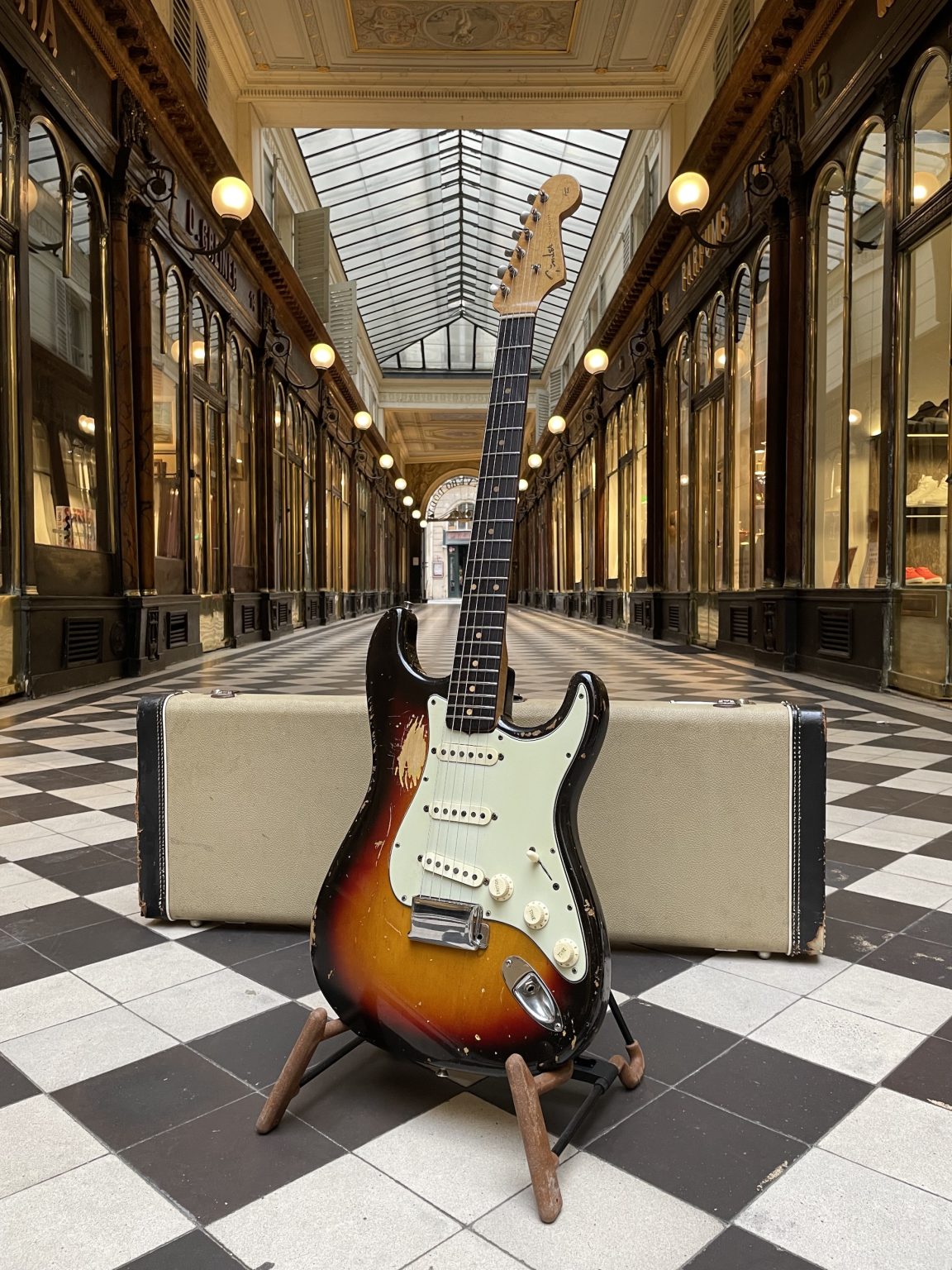
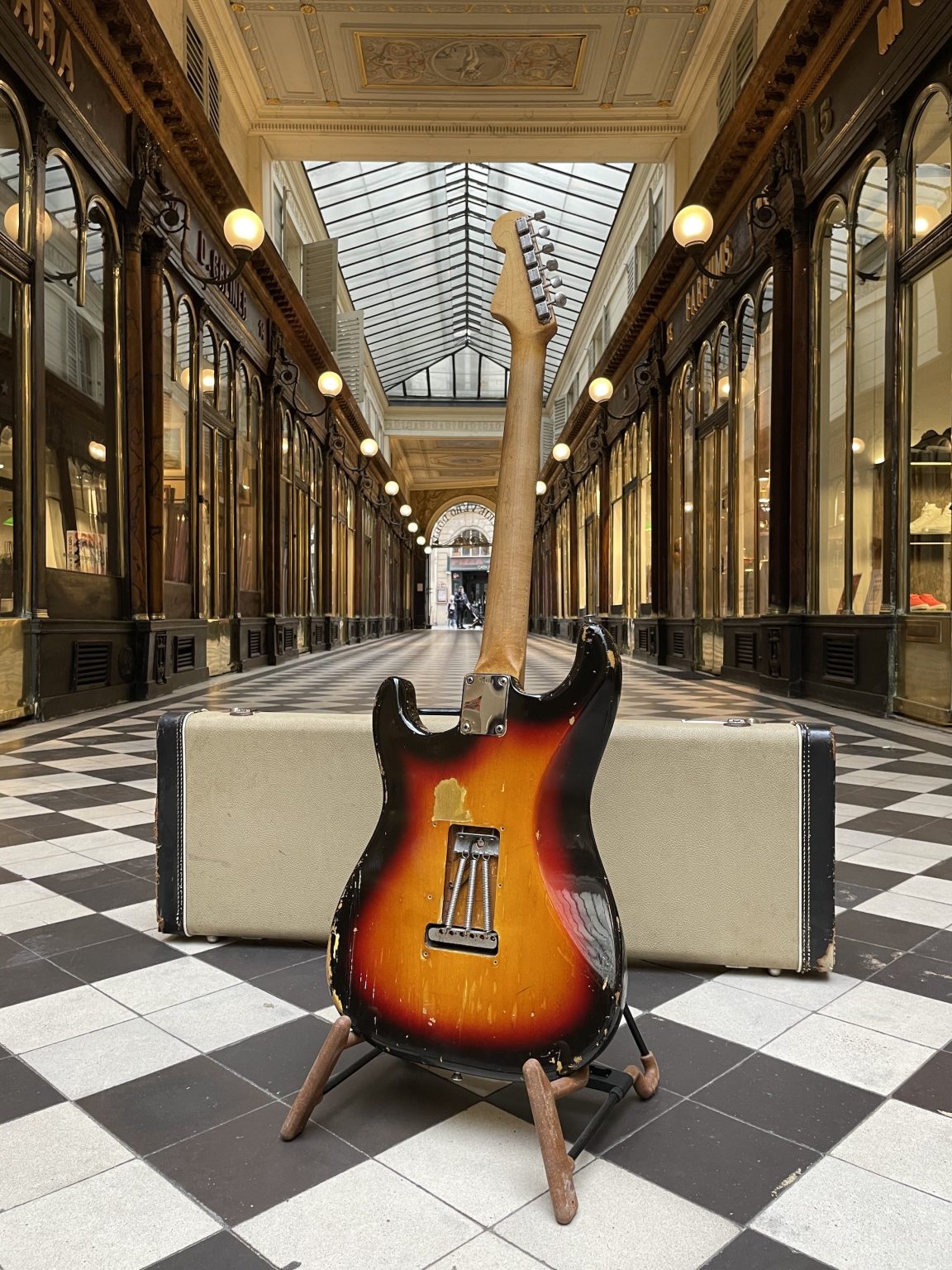
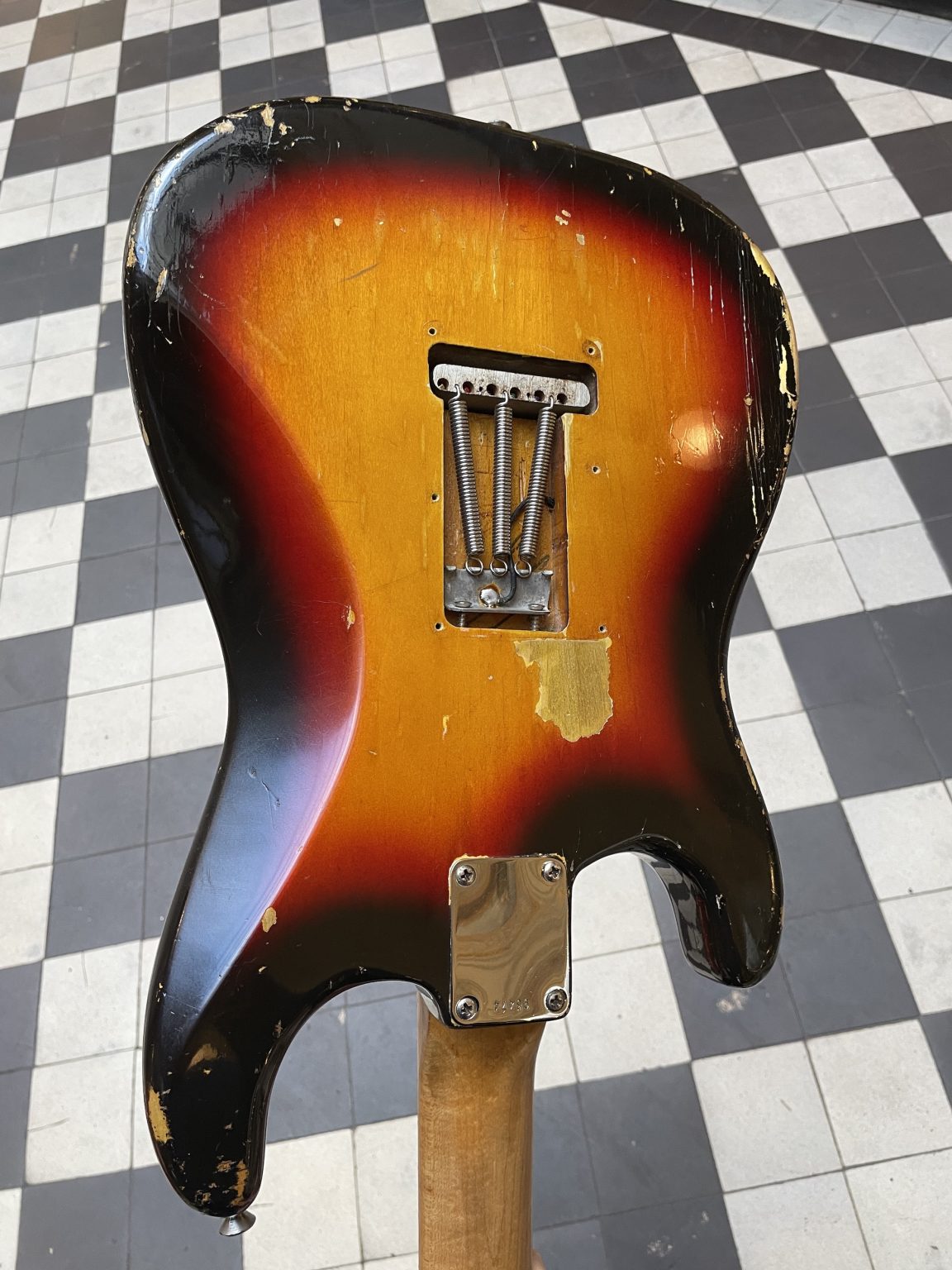
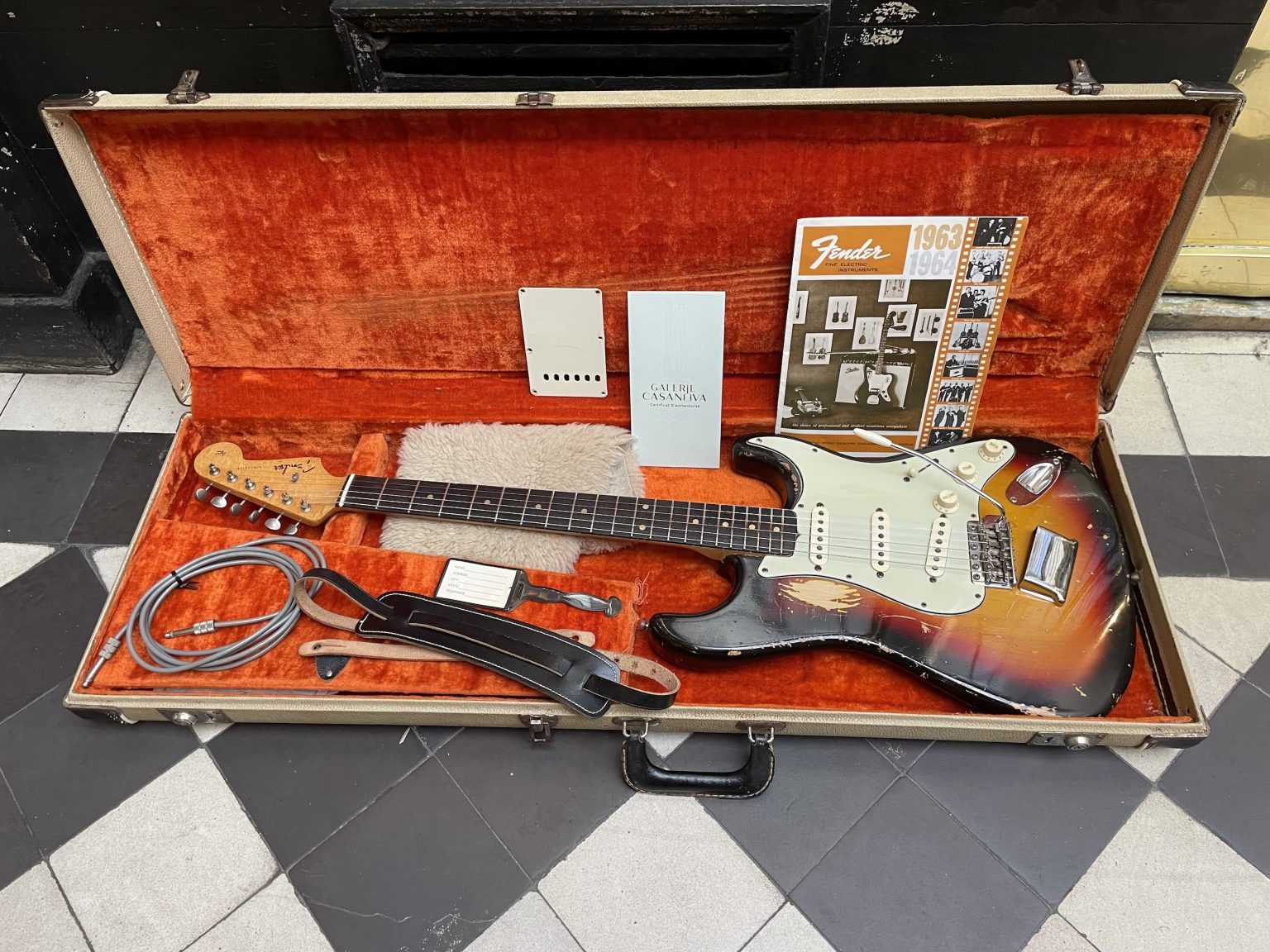
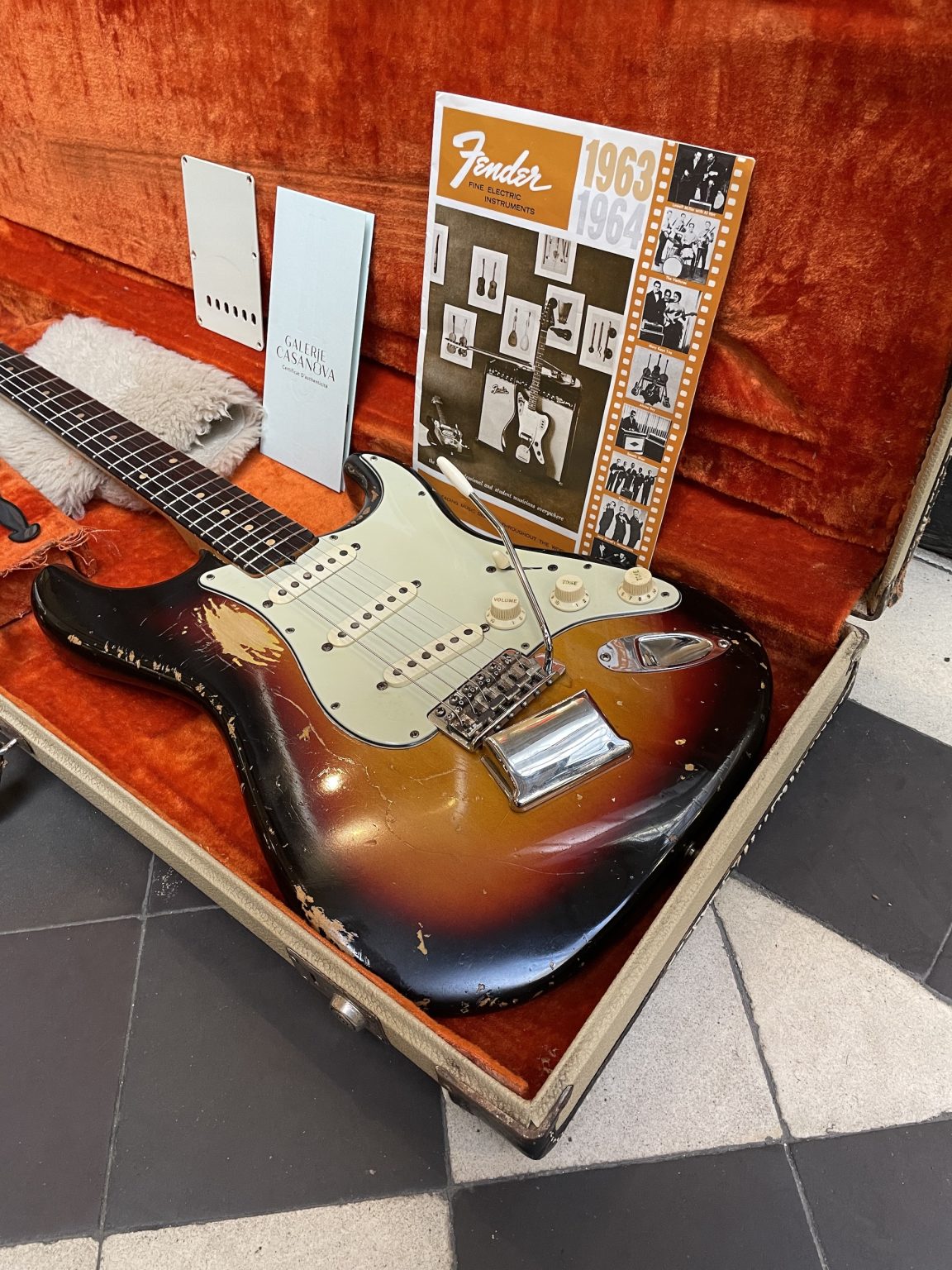
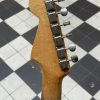
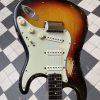
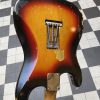
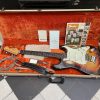
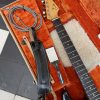
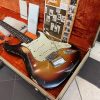
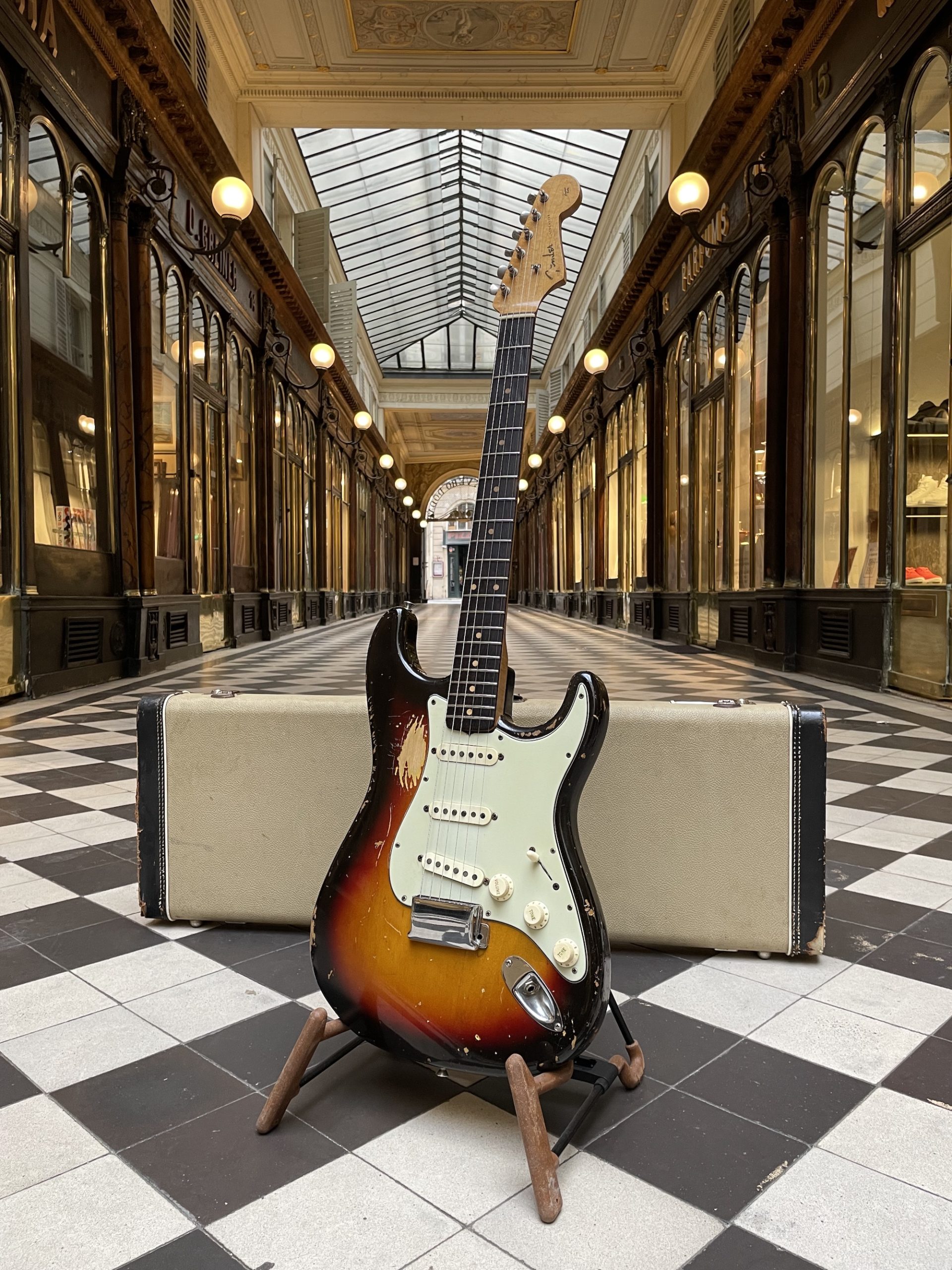
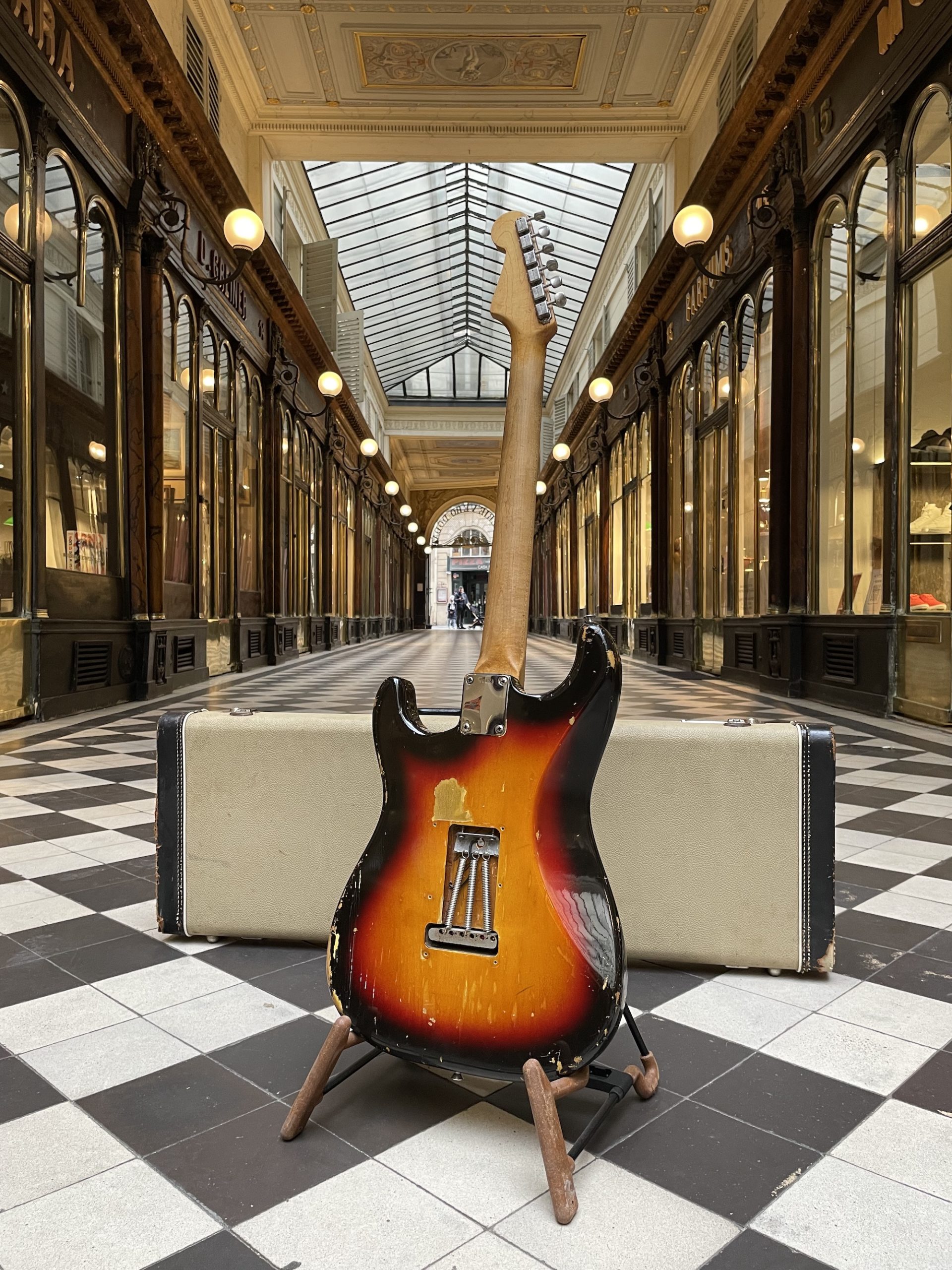
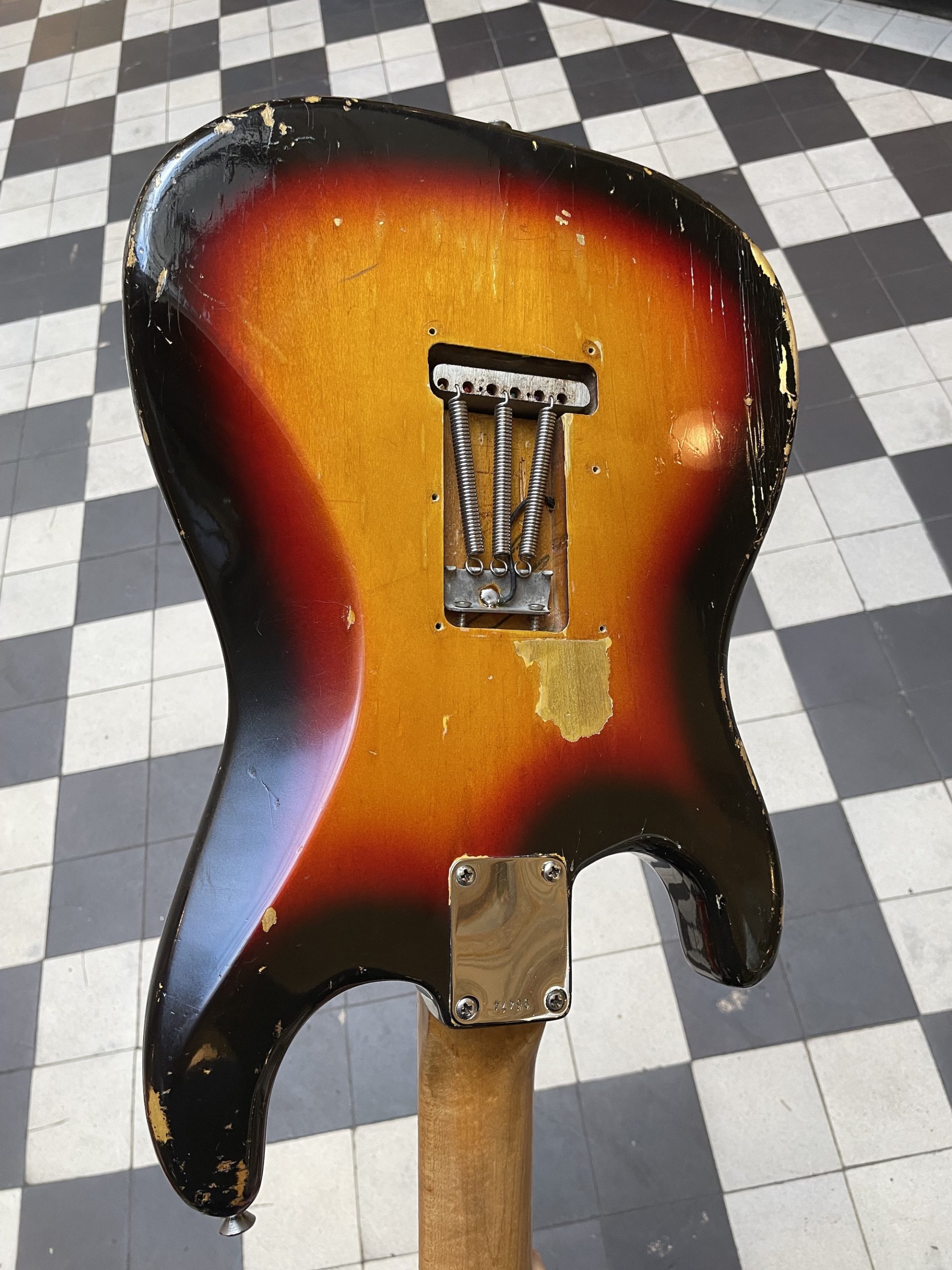
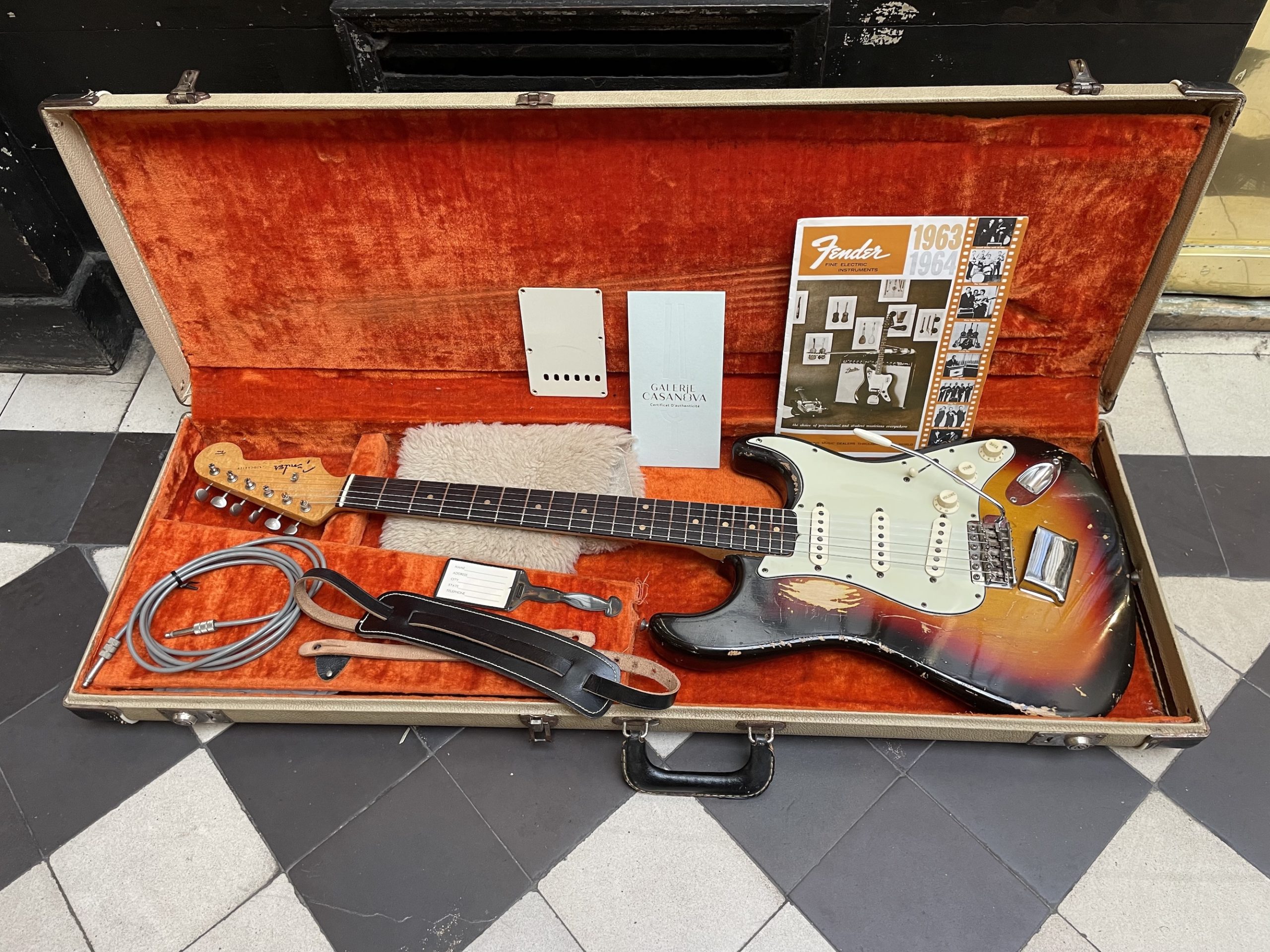
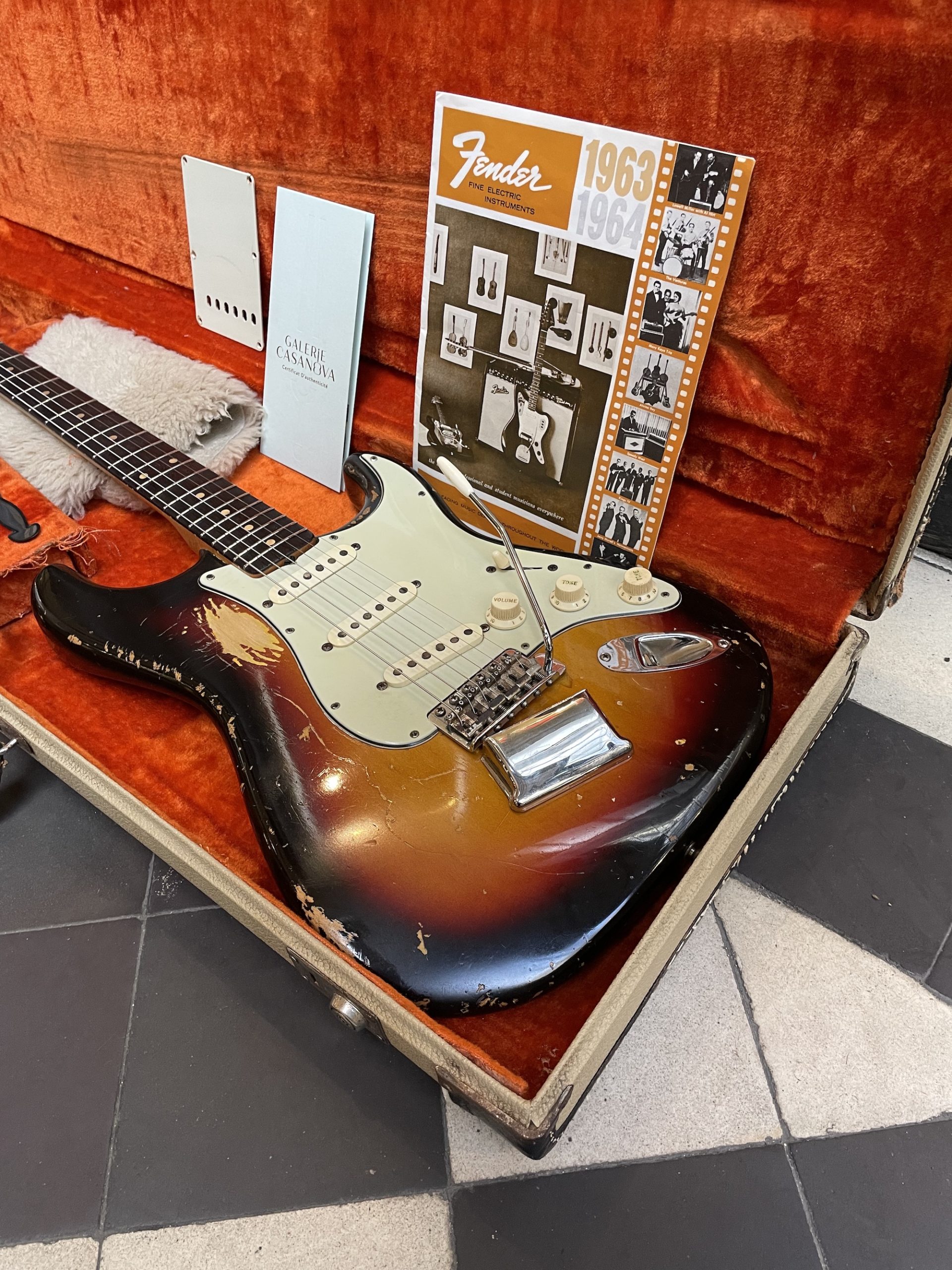
1963 Fender Stratocaster in superb, 100% original condition.
This model reigned supreme in the solidbody guitar scene during the second half of the 1950s and throughout the 1960s, overtaking the foundational Telecaster and Esquire models. And for good reason: unlike the first two models, favored by country and western swing players, many of whom were from the Silent Generation—Americans born during the Great Depression and the economic crisis leading up to the outbreak of World War II, whose cultural world was largely characterized by traditional values and the frugality typical of their era—the Stratocaster became the embodiment of a new music considered subversive and decadent in the hands of other, more liberal members of the Silent Generation (Buddy Guy, Buddy Holly, Jimi Hendrix, etc.), whose torch was immediately taken up by the next generation of musicians. Thus, this legendary guitar initially accompanied the increasingly suggestive dance moves of young rock ‘n’ rollers in the late 1950s, eventually becoming the sonic signature of the immense countercultural, anti-authoritarian, and in many ways revolutionary phenomenon that exploded in the following decade, galvanized by intergenerational tensions against a backdrop of the Civil Rights Movement, protests against the Vietnam War, and psychedelic experimentation—hard rock and psychedelic rock did their work.
The Stratocaster is perfect for this role, introduced in 1954 with an iconoclastic shape that, for the first time, bore almost no resemblance to the appearance one would associate with a guitar (even the Telecaster featured lines that hinted at the instrument as it had arrived from Europe), fully exploiting the possibilities offered by its construction from a solid block of wood. The asymmetrical, double-cutaway body is designed for comfort and ergonomics, with rounded edges and contours intended to accommodate the musician’s arm and chest. Its three single-coil pickups and Synchronized Tremolo bridge made it a versatile tool that allowed it to become the instrument of choice for the early stars of nascent rock and roll – notably Buddy Holly, whose unique playing style is intimately linked to this guitar, and whose untimely death is a great loss, as he was unable to develop it further. The influence of Holly and his contemporary rockers cemented the Stratocaster’s popularity with the American public and boosted its sales, thus contributing greatly to the expansion of Fender, which grew from a small business employing at most a few dozen workers to a major manufacturer with a production complex comprising 27 buildings and employing no fewer than 600 people in total, all within the space of a decade.
As the 1960s dawned, a new musical phenomenon emerged in the form of surf music – a genre primarily characterized by its boisterous instrumental compositions, filled with tom and snare drum rolls, saxophone solos, and above all, guitar riffs drenched in spring reverb. These tracks brought a particularly exotic flavor to the musical landscape of the time and captured the imagination of young Americans, many of whom lived far from the sunny shores of California. Thus, following the same pattern as a similar phenomenon that occurred 45 years earlier with the rise of Hawaiian music, which had boosted sales of ukuleles and slide guitars, a new generation of musicians swelled the ranks of guitarists, often choosing the Stratocaster, which at the time was the least expensive professional model equipped with a vibrato – the Jazzmaster and Jaguar having taken center stage in the catalog. They thus found themselves emulating their surf rock idols, the Stratocaster players – we’re thinking, of course, of the Ventures and the Surfaris, but primarily of Dick Dale, the King of the Surf Guitar, who spoke of his beloved instrument in the following terms: “For the particular sound you want – punch, power, a driving force of true rock and roll – you’ve got to play a Stratocaster.” We can also mention the importance, closer to us, of Hank Marvin and the Shadows, who were also quintessential promoters of the Stratocaster in the UK and Europe – and in this respect, were largely responsible for the flood of European orders in the first half of the 1960s for Stratocasters in a Fiesta Red custom color!
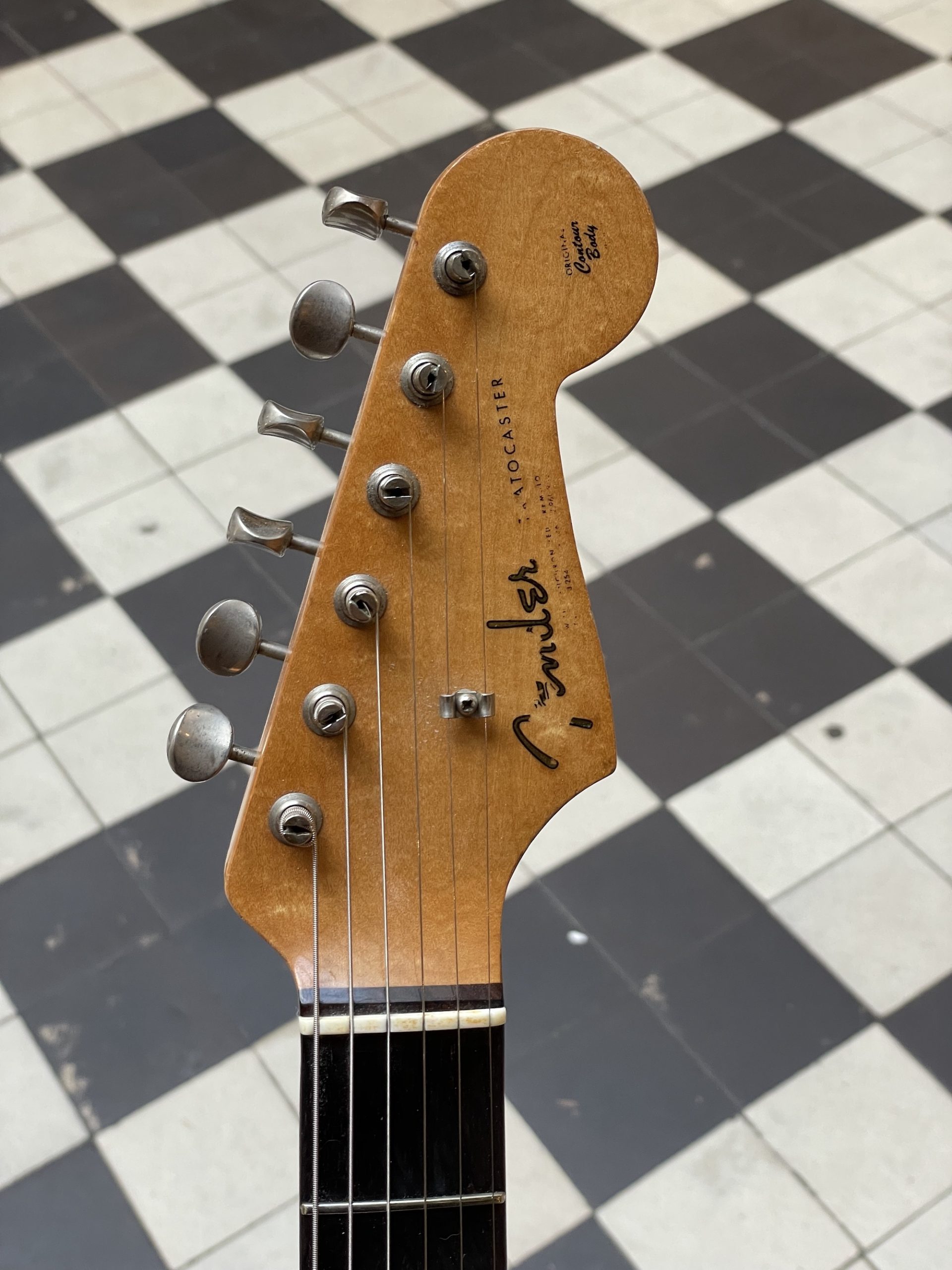
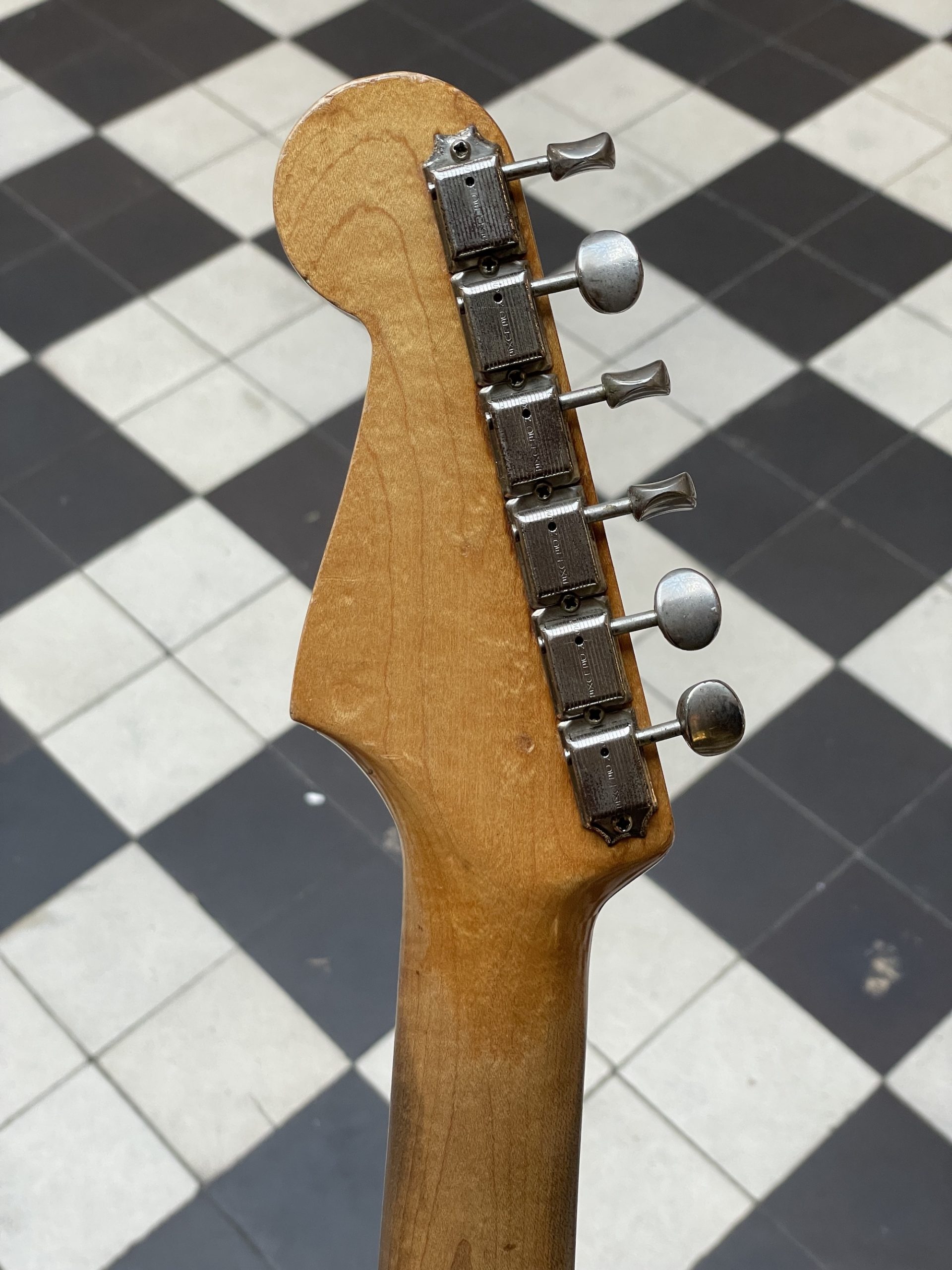
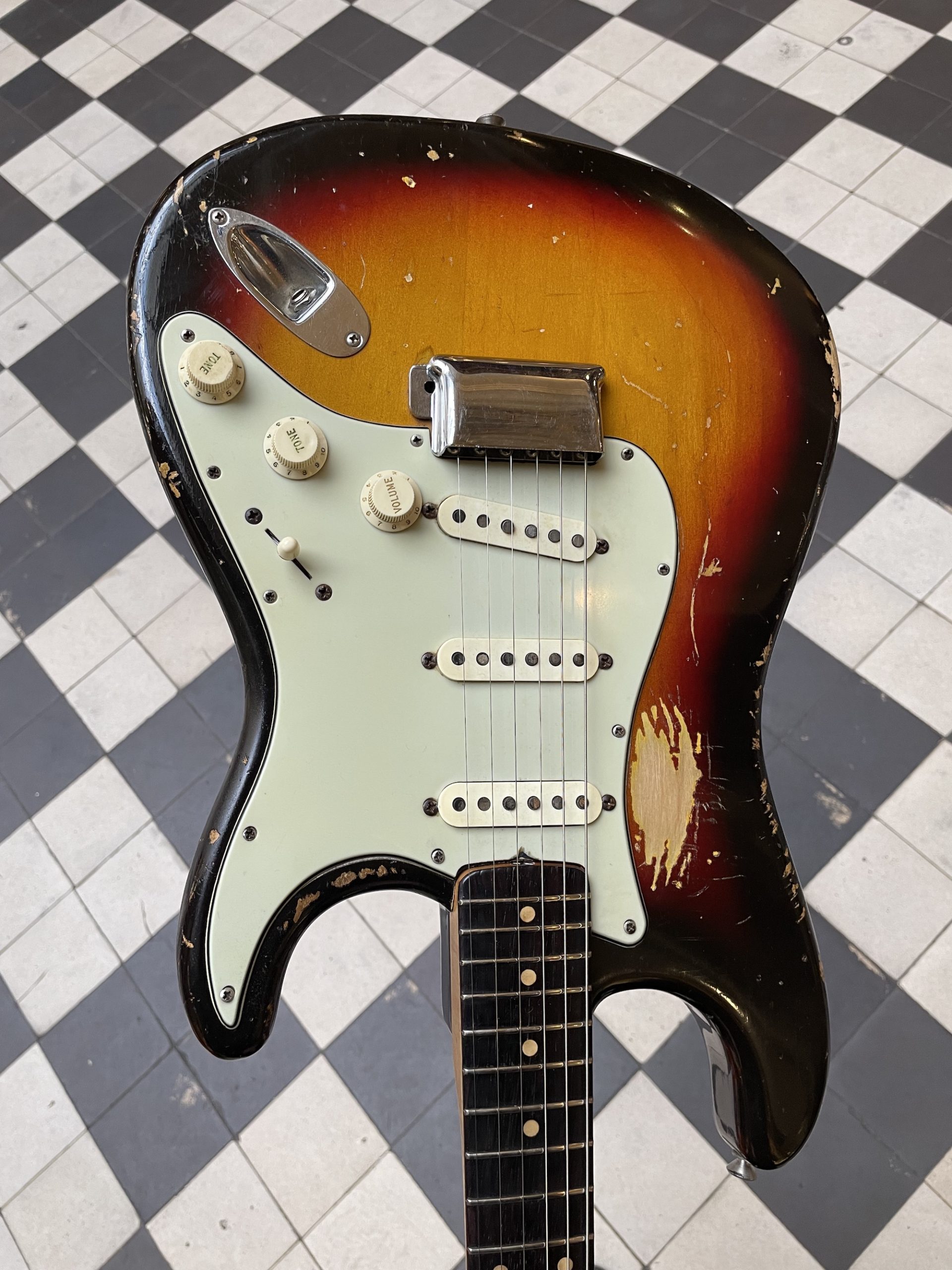
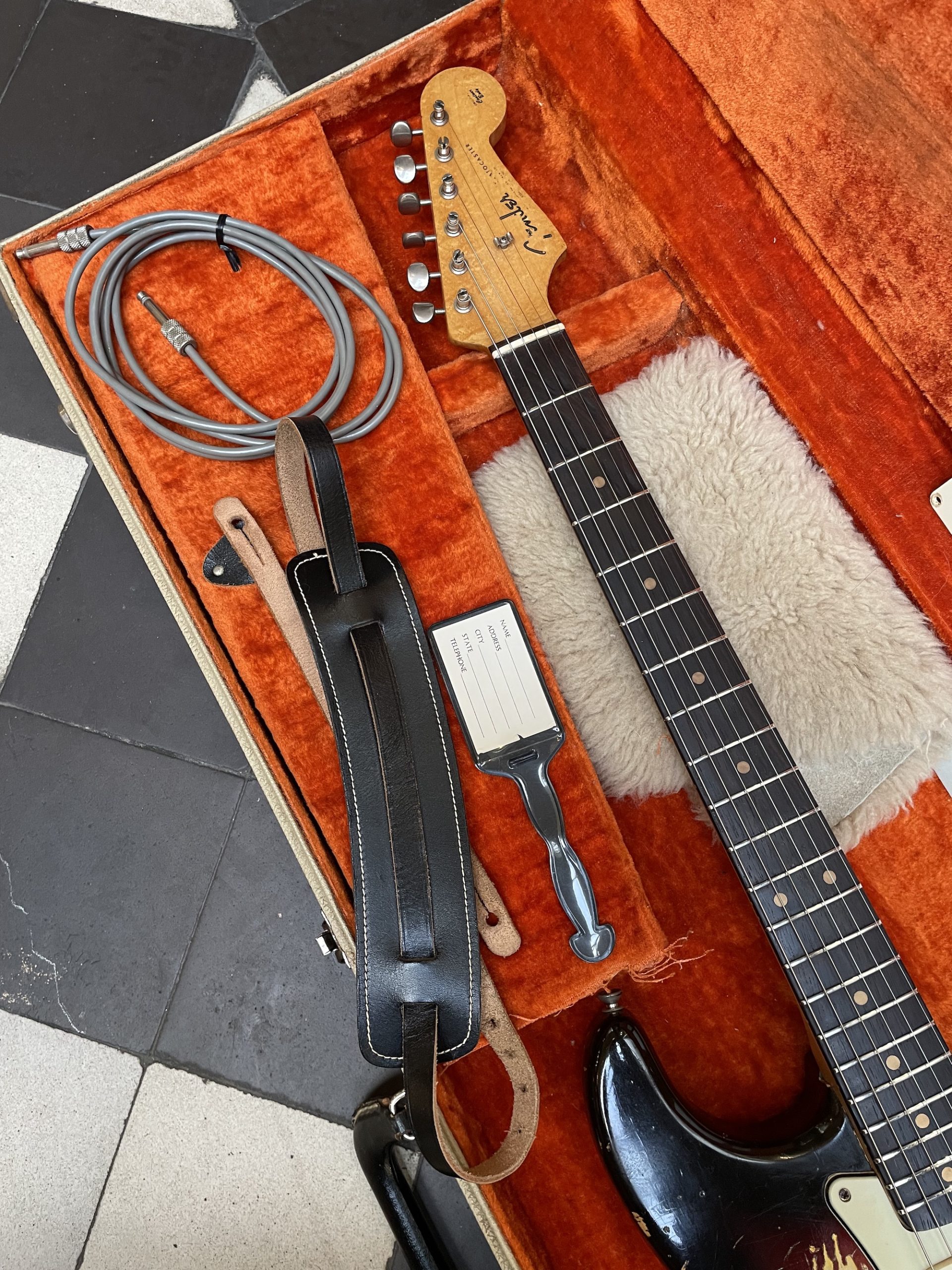
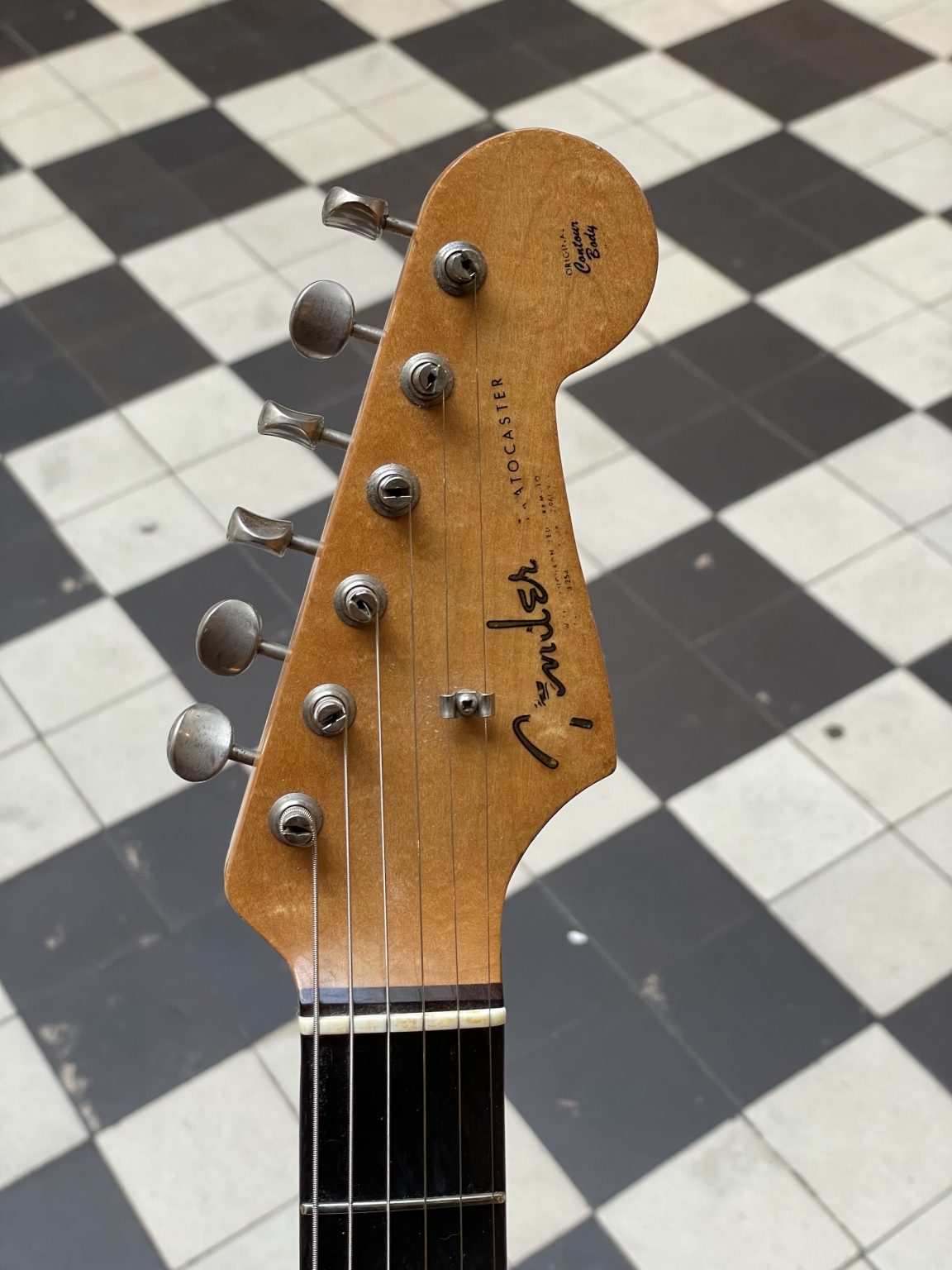
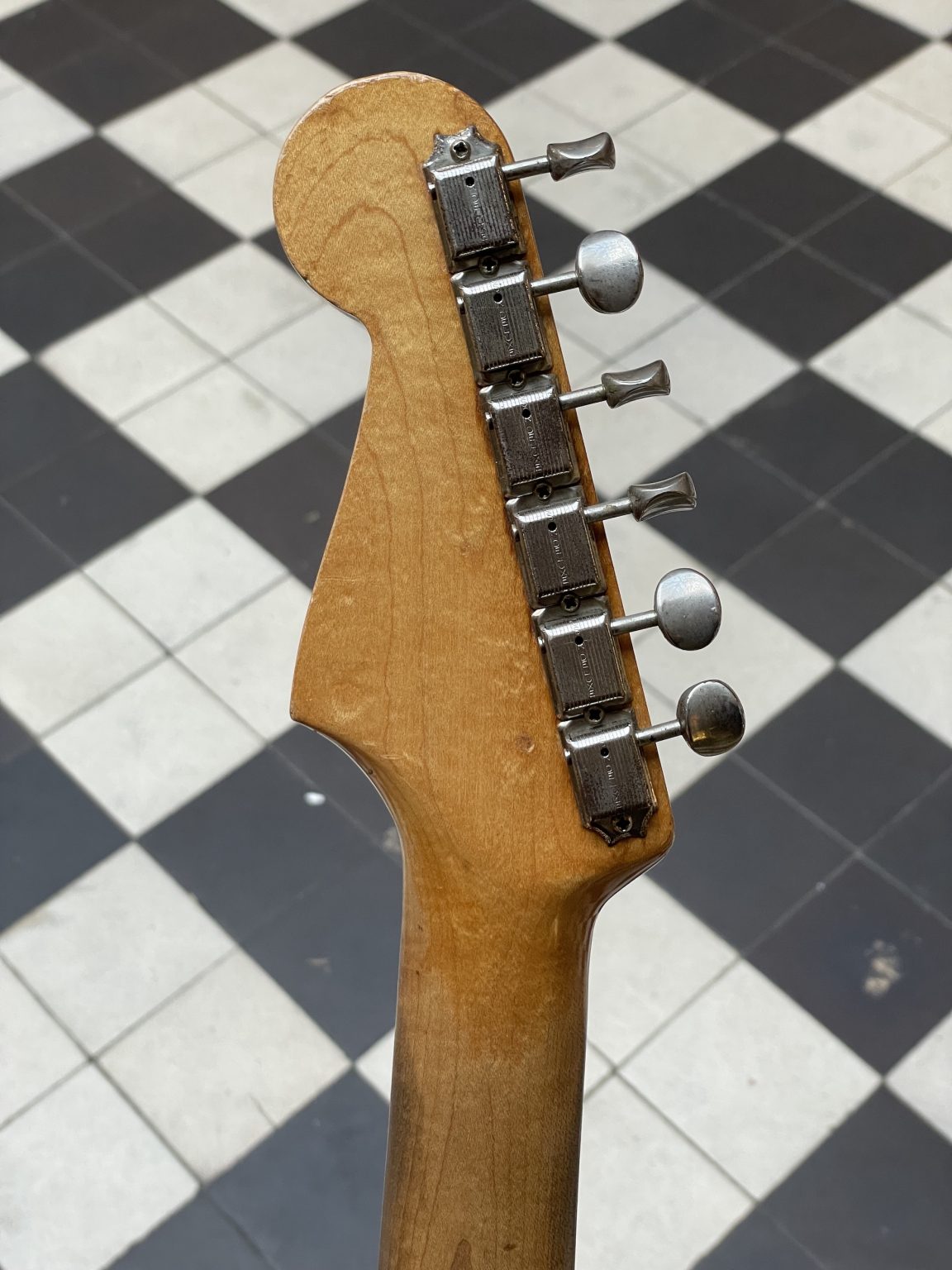
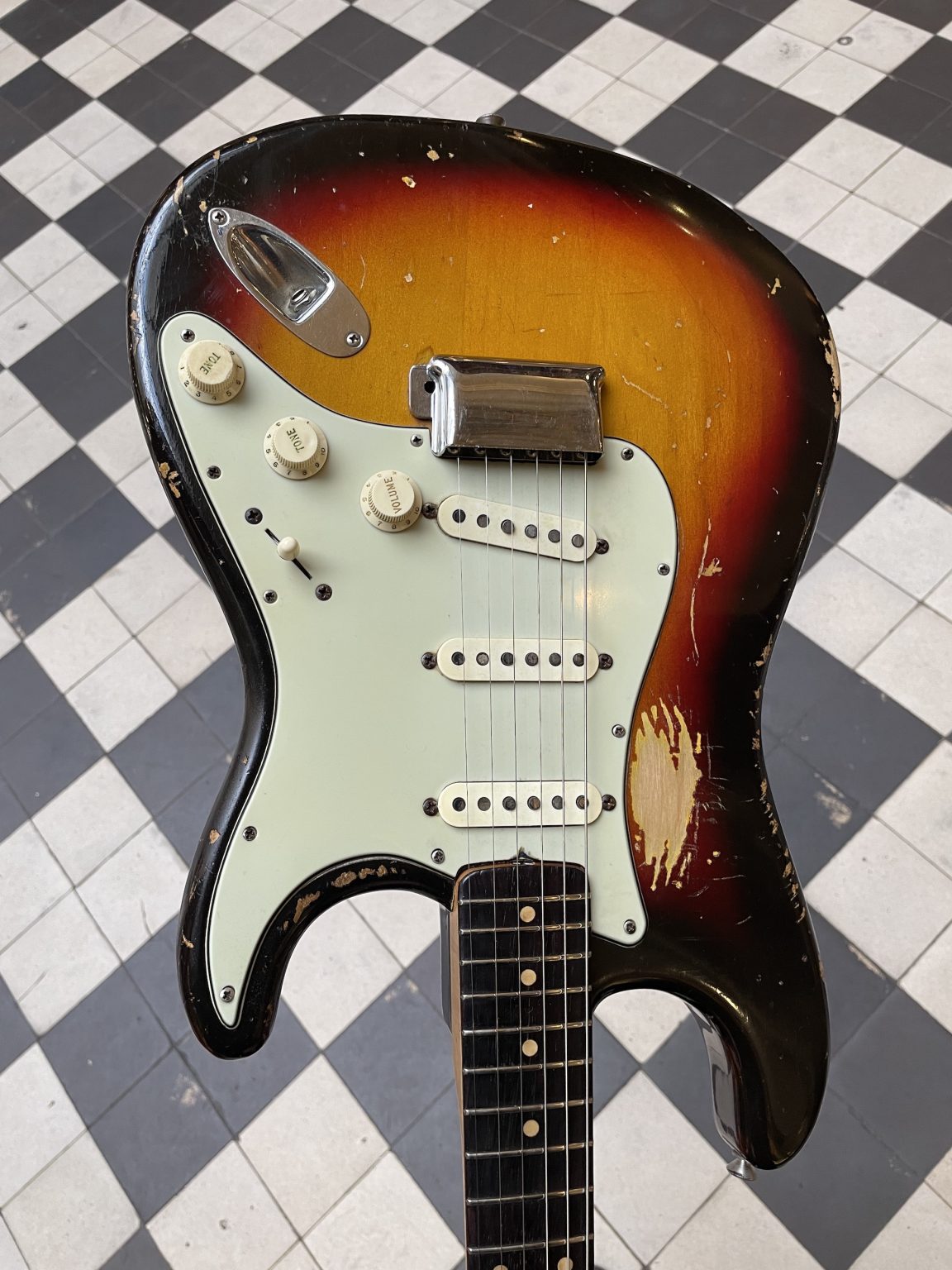
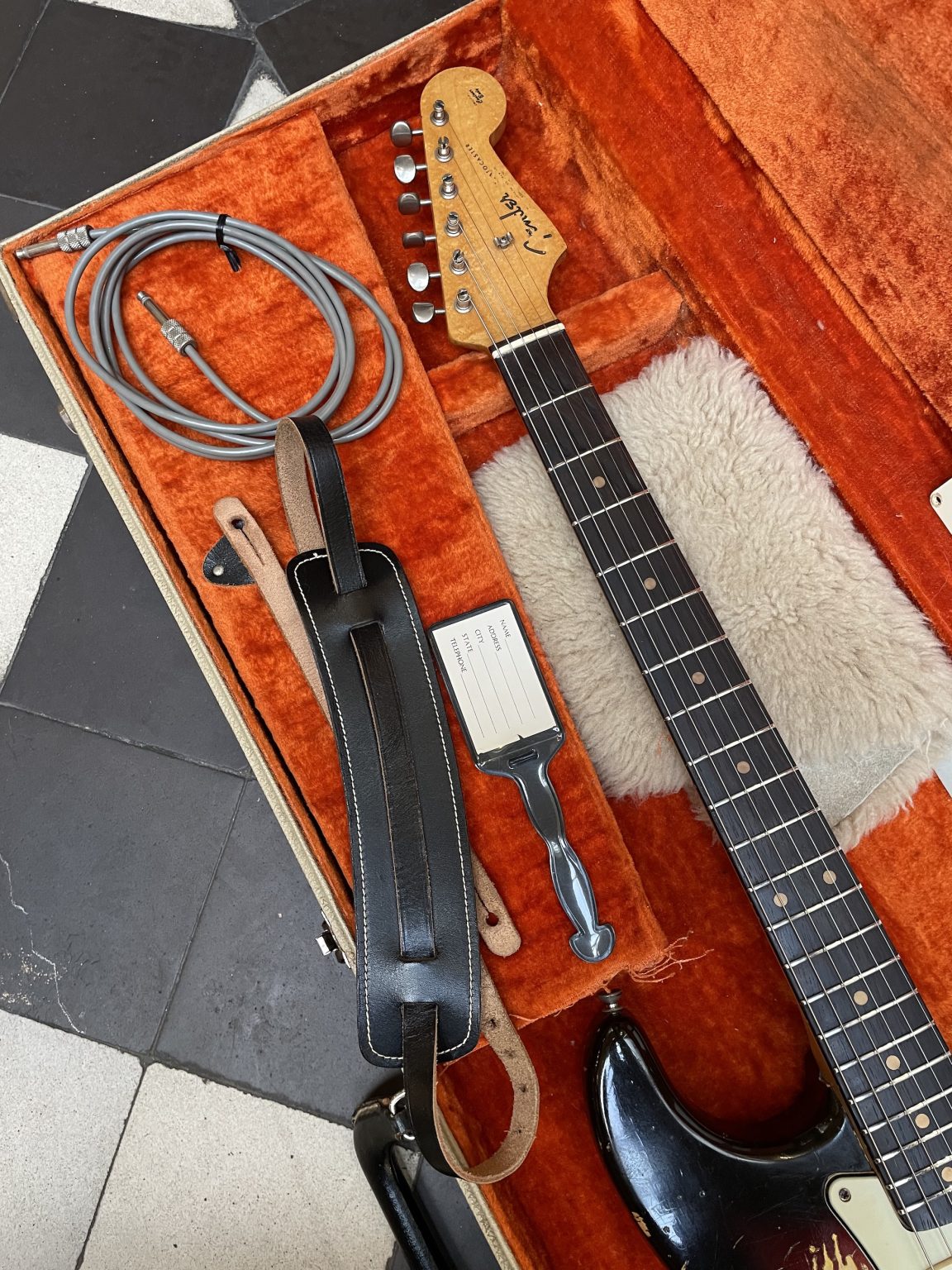
The instrument presented here was born at the heart of the golden age of surf music and when the pre-CBS Fender era was reaching its peak. Pre-CBS Strats are essentially characterized by two elements: their three-tone Sunburst finish, ranging from black to yellow through red, and the maple neck topped with a rosewood fingerboard. On this 1963 model, the rosewood is thin and veneered onto the maple neck, which has a radius. This construction is known as a veneer board, as opposed to the previous slab board construction where Fender used a thick slab of rosewood glued flat to the neck. The stated reason for this change is the difference in shrinkage between the two woods due to humidity variations, which is more difficult to correct on a slab board than on a veneer board—although economic considerations which required using less of the precious exotic wood seem just as plausible of cause! We also find the spaghetti style logo – a legacy of the previous decade, present on Stratocasters for some time after the production of this guitar before being replaced by a larger so-called transitional logo, identical to that already present on the Jaguar and Jazz Bass; the so-called clay dot fingerboard inlays; a cellulose pickguard whose color has turned green as was frequently the case before Fender replaced them with an ABS pickguard; a set of six individual Kluson Deluxe tuners. All these elements, including the three grey bottom single-coil pickups, the cloth-wrapped wiring, the potentiometers dated to the correct year, and the tone capacitor, are original. This is a pure example of a legendary guitar, prepared and set up for playing, ready for decades to come.
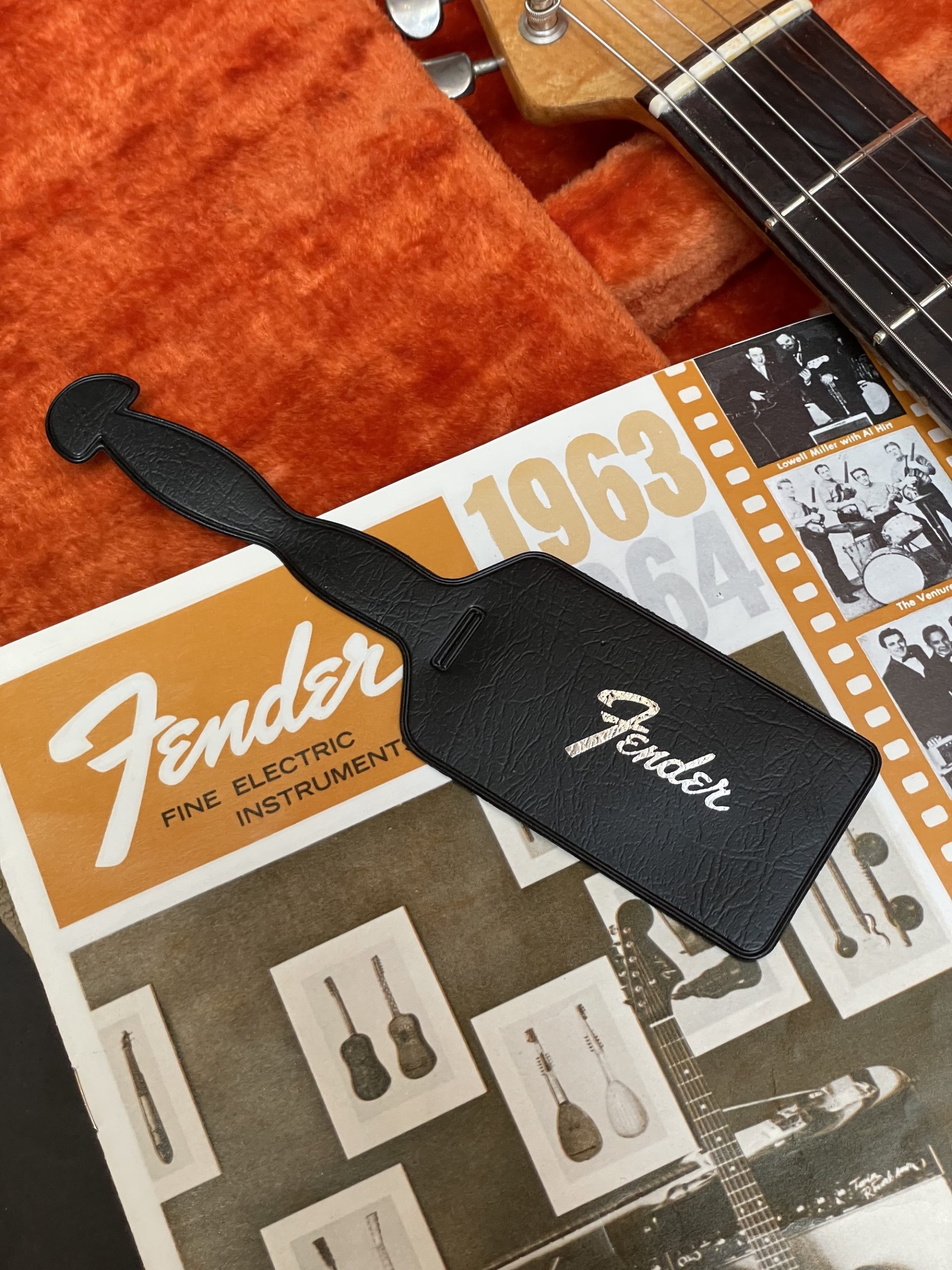
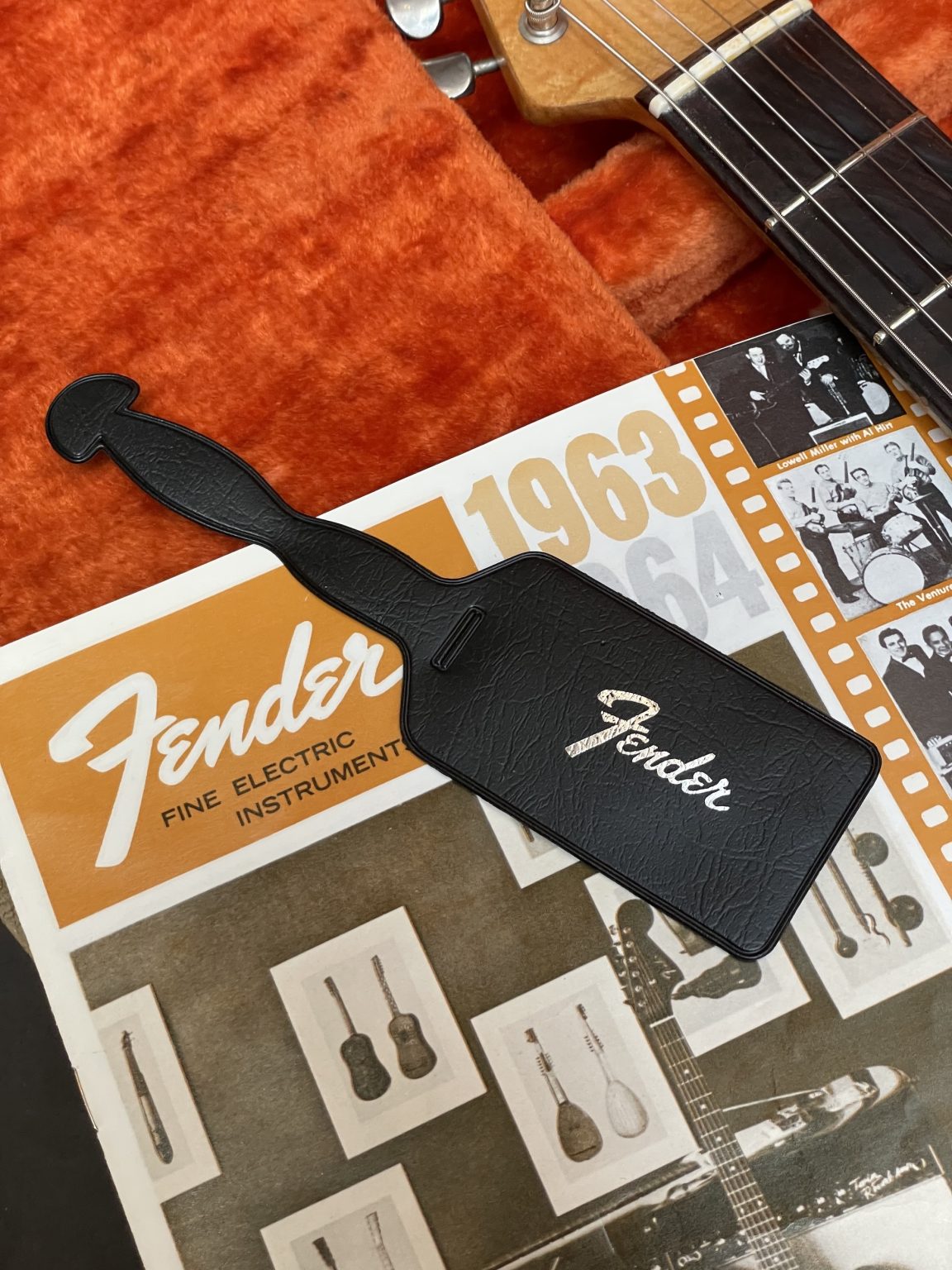
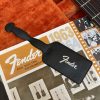
Sold in its original Fender white tolex case, with a cool set of original accessories: tremolo arm, jack cable, strap, case label, and ashtray bridge cover. This lot is completed by a reproduction of the 1963-1964 Fender catalog. The guitar is sold with its certificate of authenticity issued by Jérôme Casanova.
Related products
-
Sale!
1997 GIBSON TAL FARLOW CUSTOM
€8.950,00Original price was: €8.950,00.€7.450,00Current price is: €7.450,00.