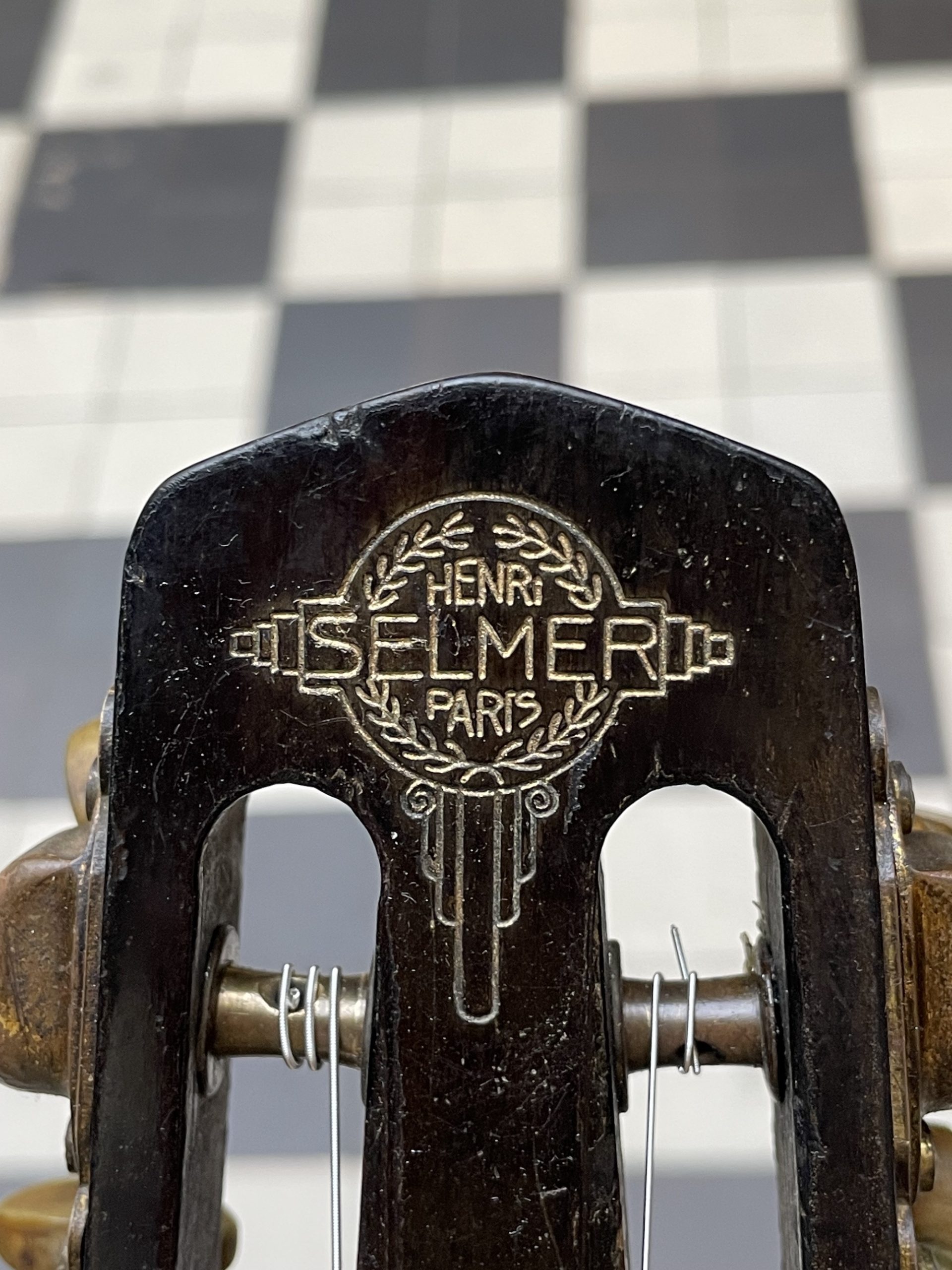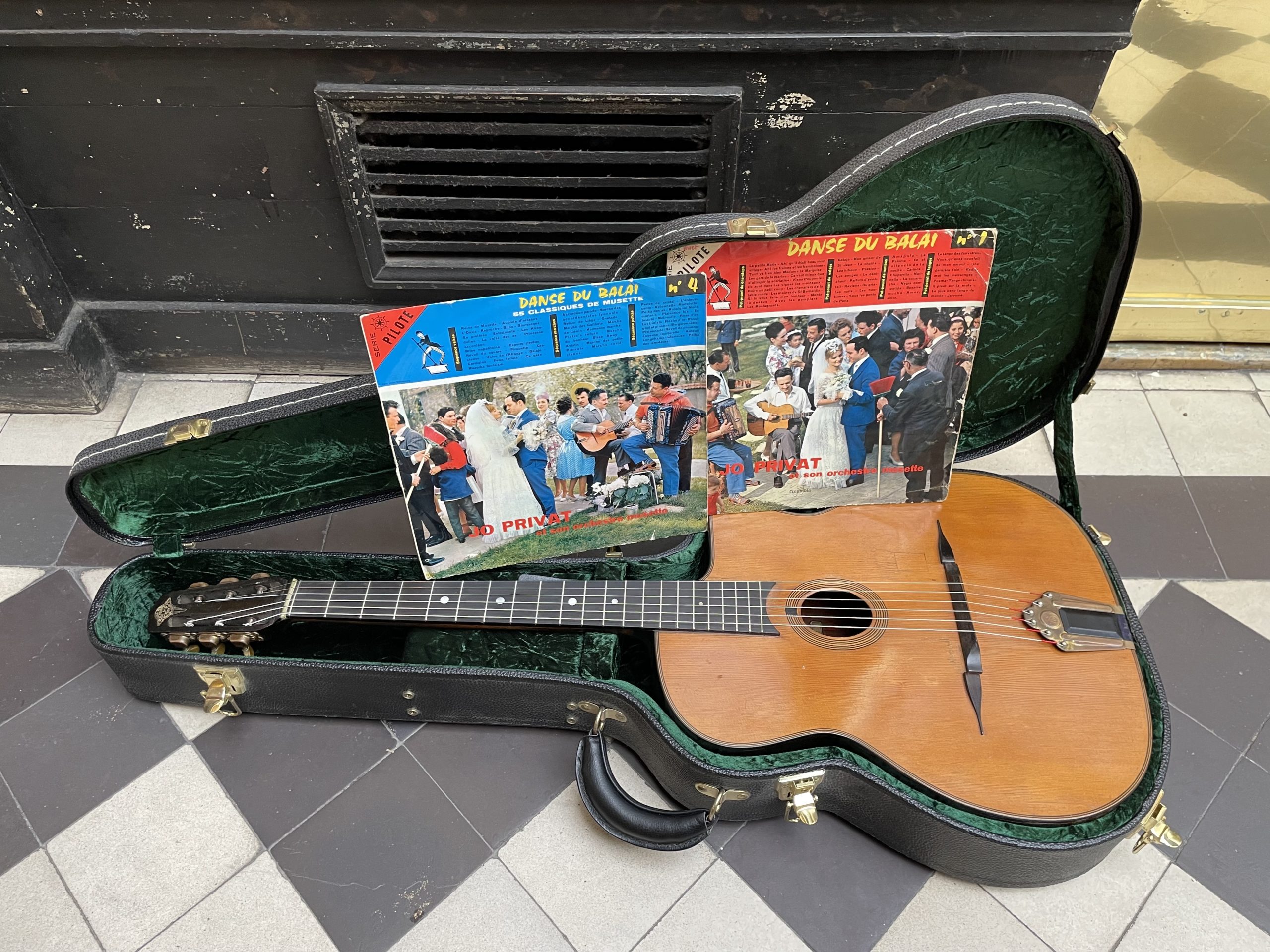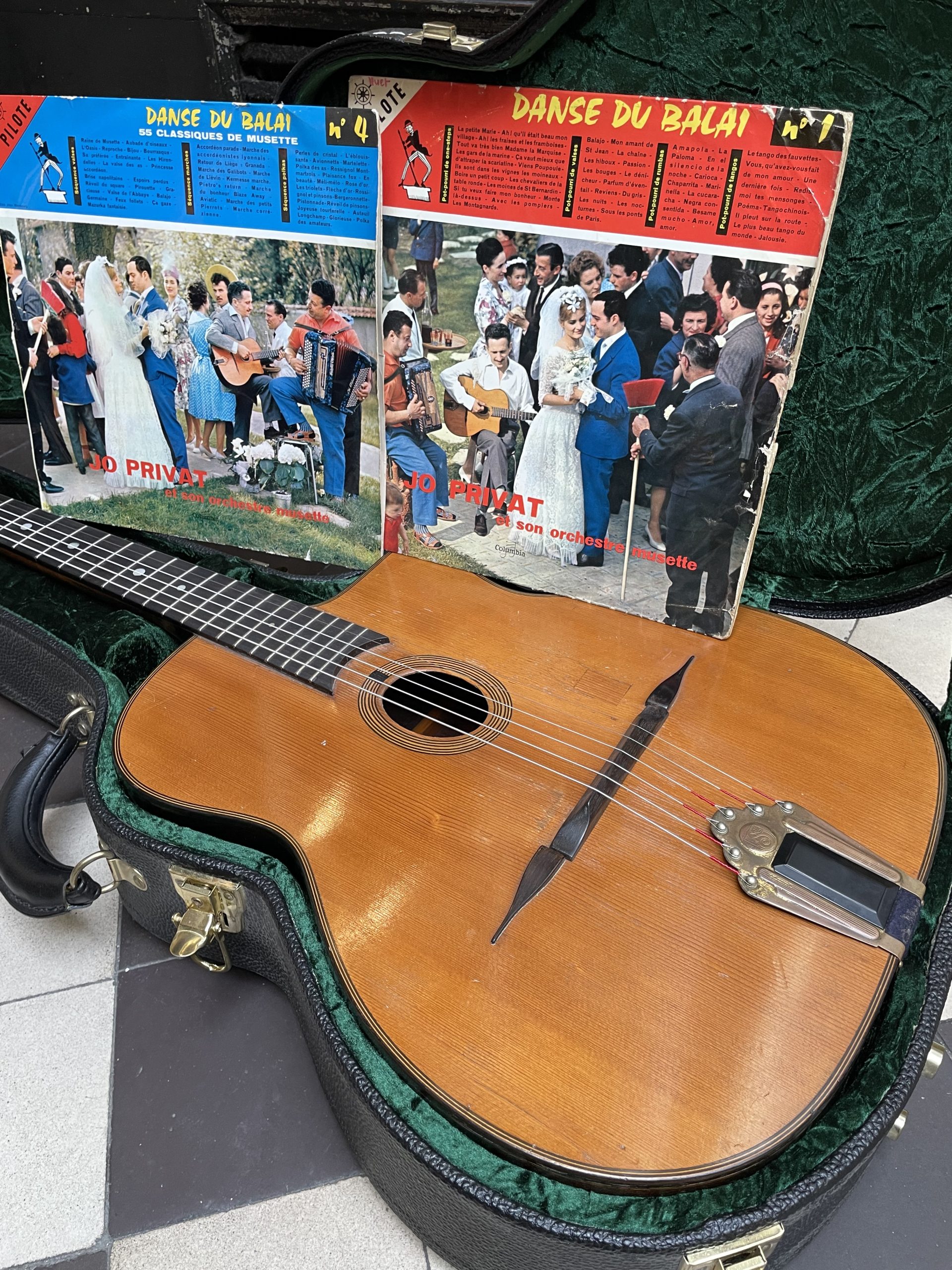


1940 SELMER PETITE BOUCHE #517
€37.800,00
In stock
The prices indicated correspond to the price in the case of payment in-store or by bank transfer. In the case of payment by credit card via the website, a processing fee of [3.25% + €0.25]* will be applied to the total amount of the basket, including delivery costs.
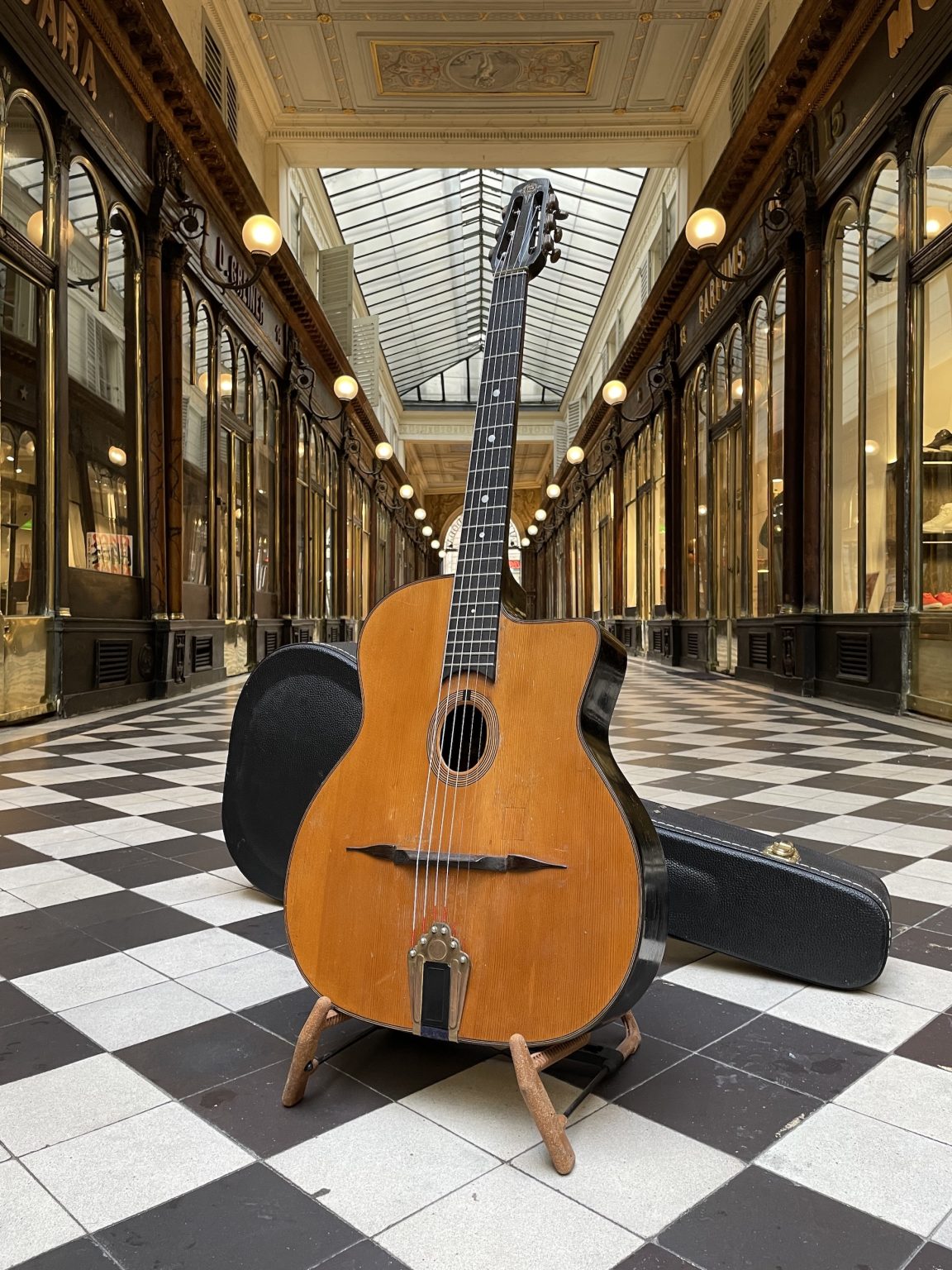
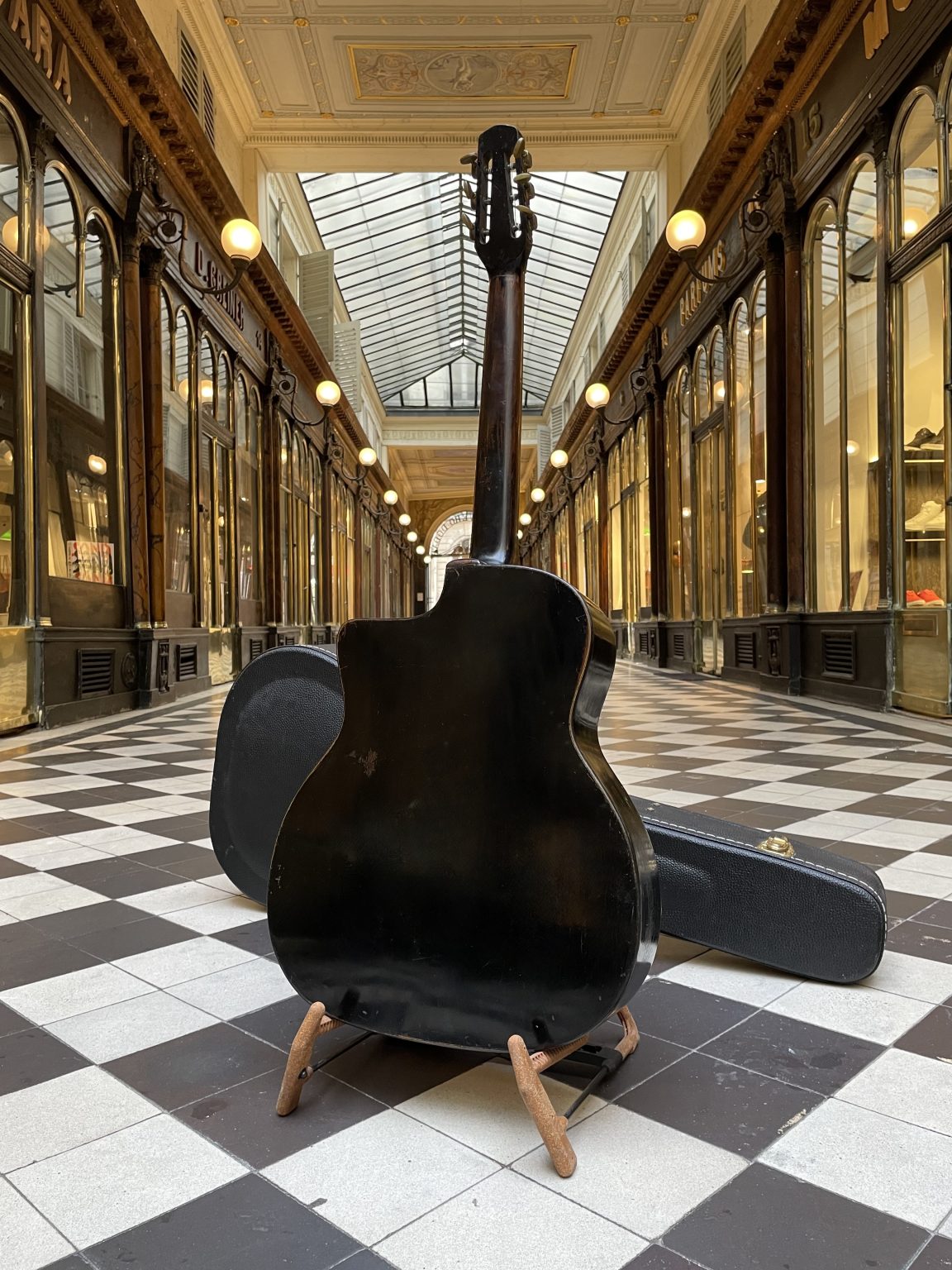
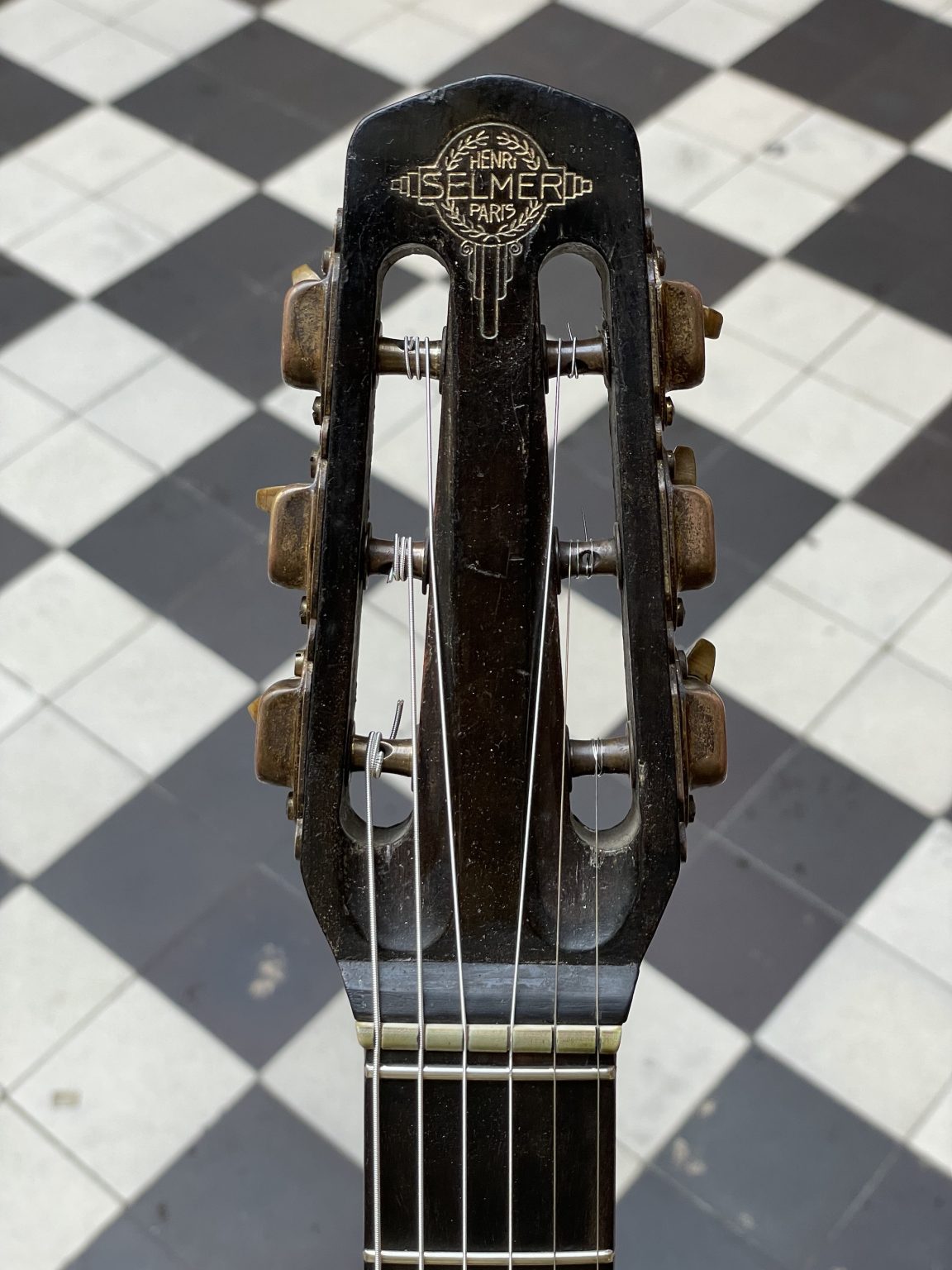
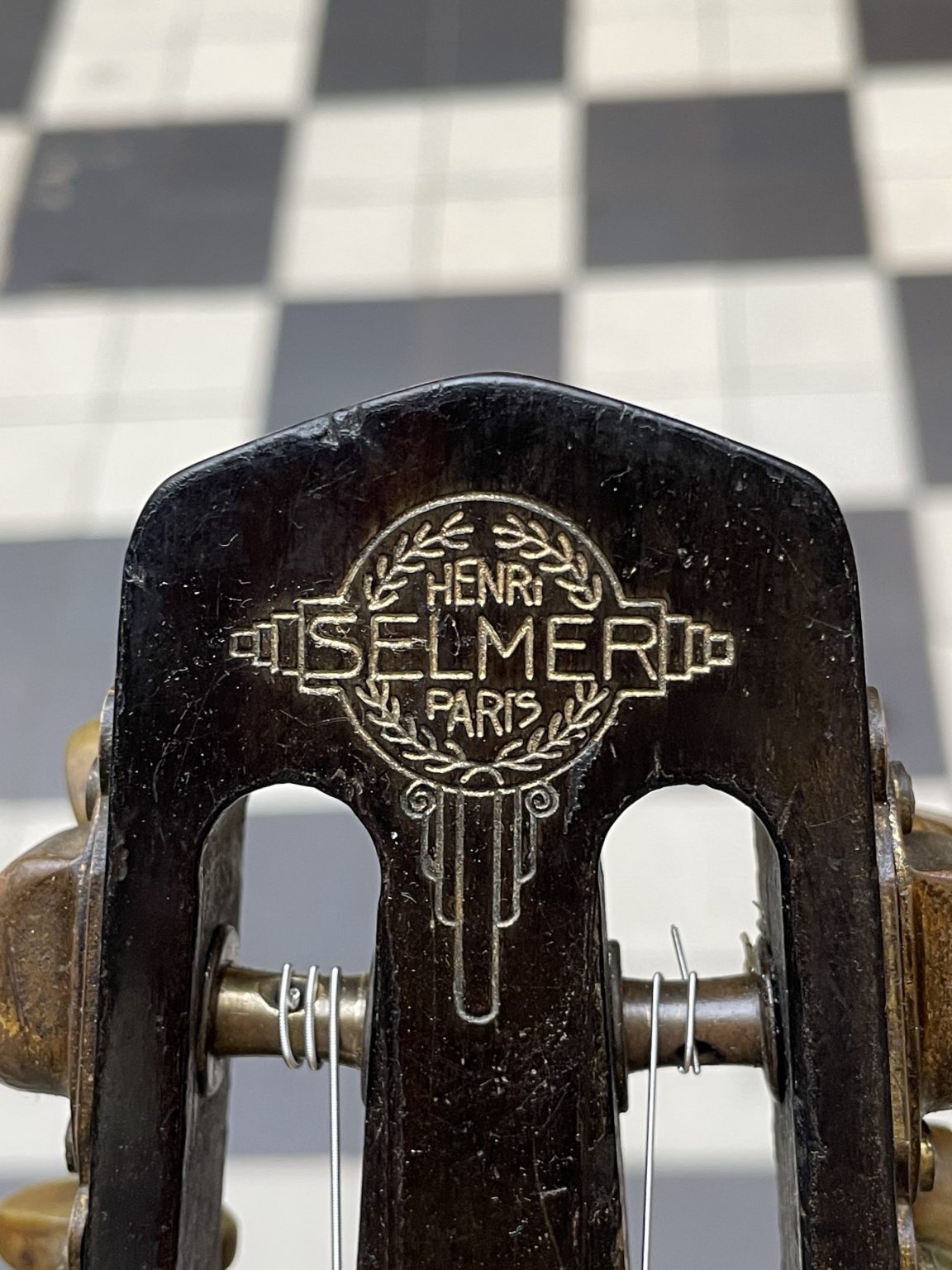
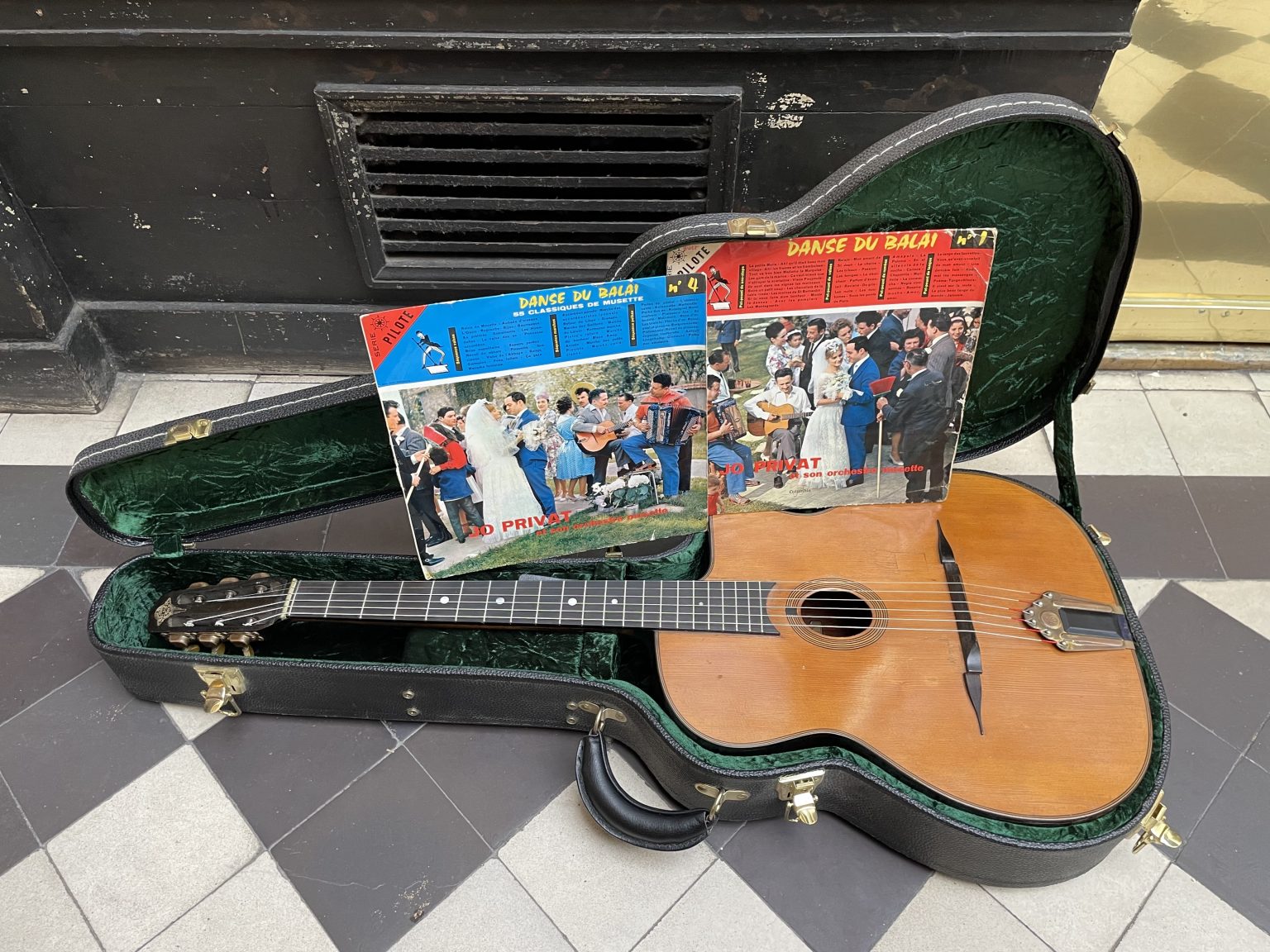
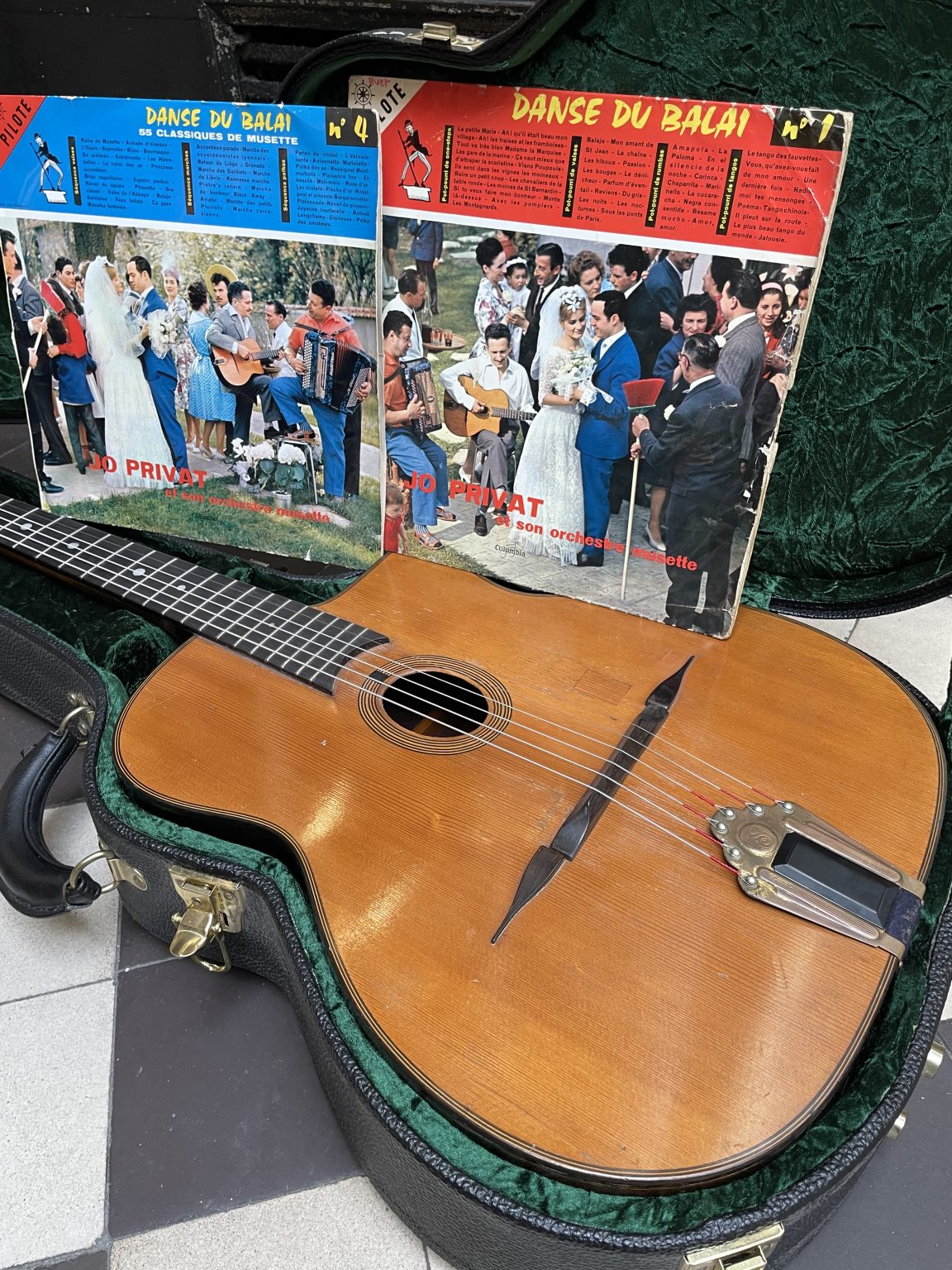
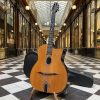
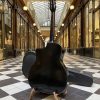
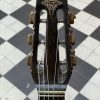
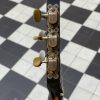
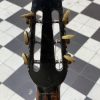
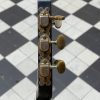
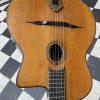
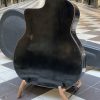
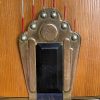
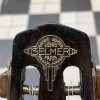
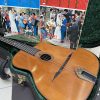
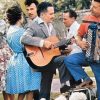

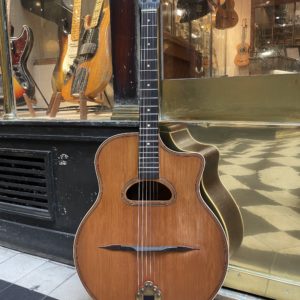
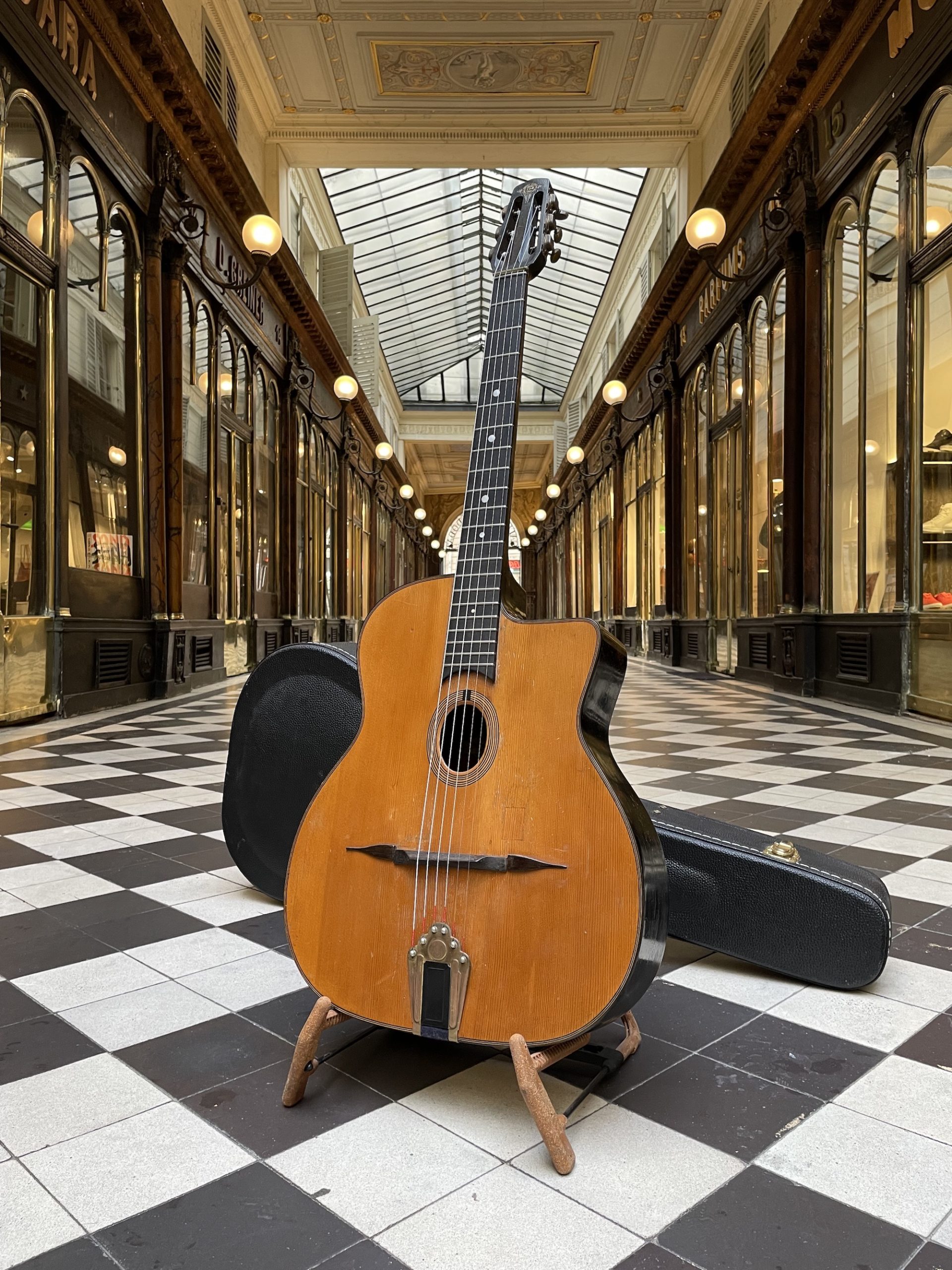
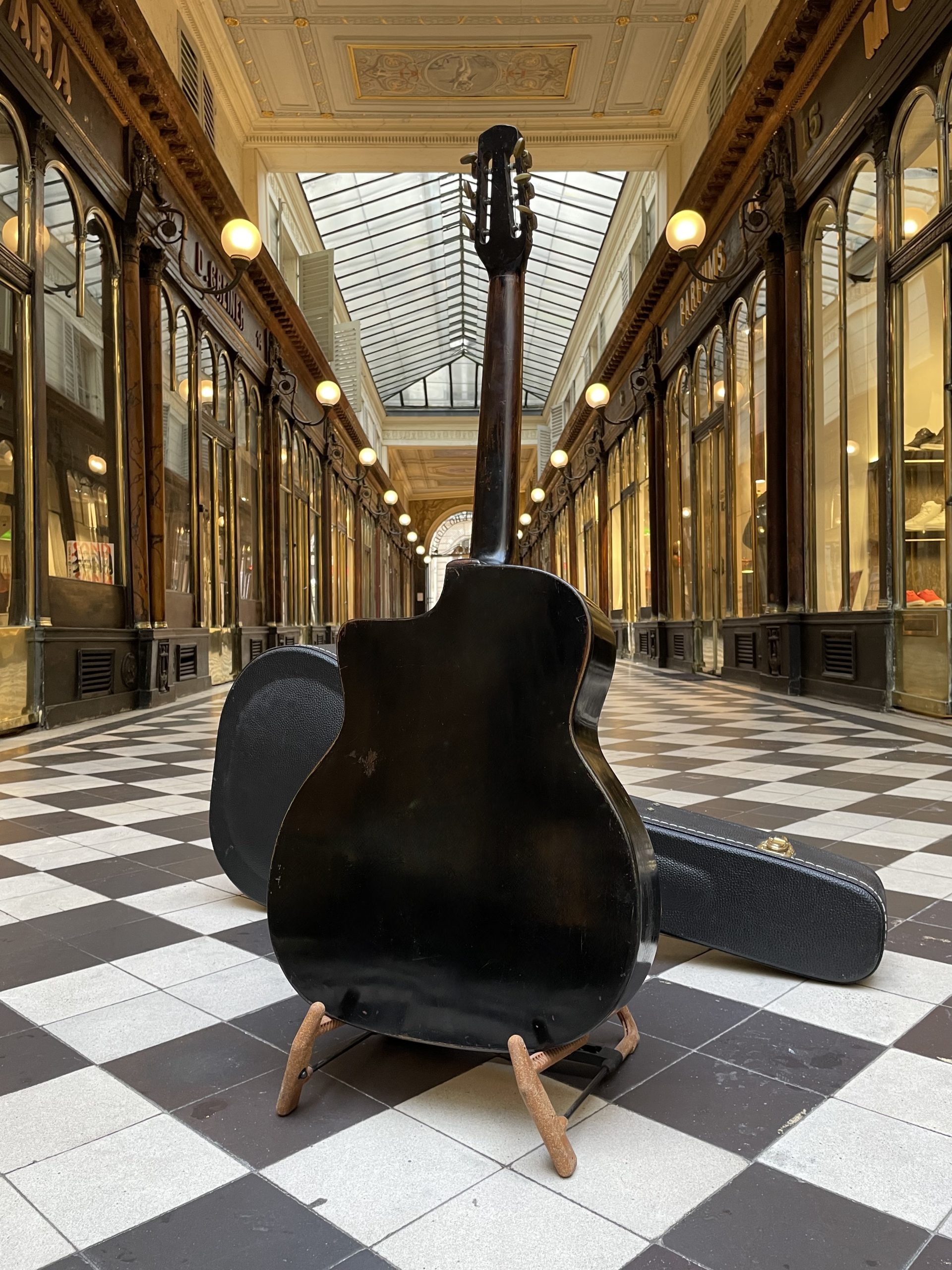
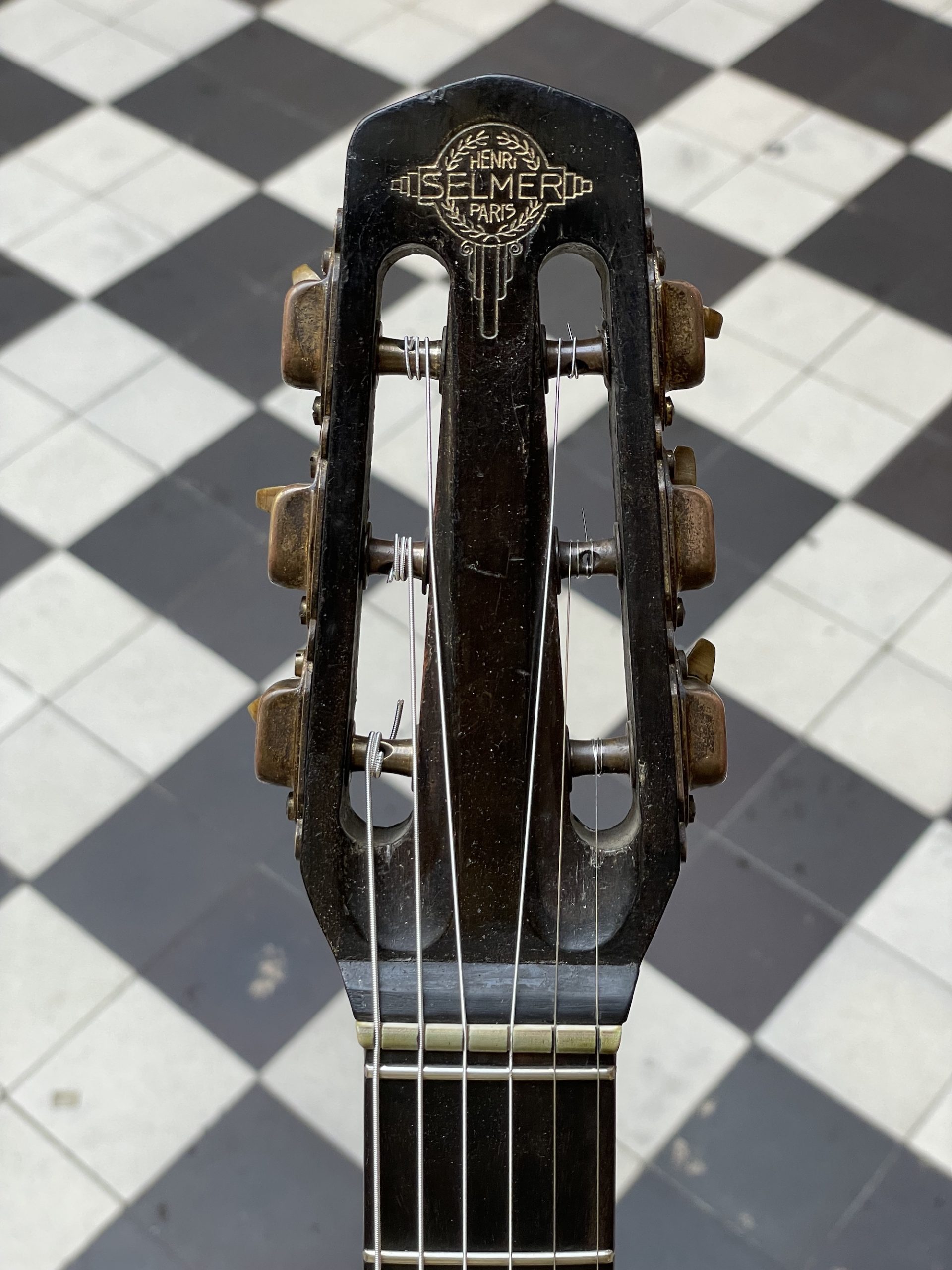
Selmer Petite Bouche #517 from 1940, in exceptional original condition.
We see many of these great French guitars come and go, guitars that are the object of, if not adulation and passion in the almost biblical sense of the word, at least a great and universally shared fascination among players of what is known as Gypsy jazz, and we have very rarely encountered one that falls short of being incredible. It is equally rare, however, to come across an instrument as excellent as the one presented here, not only in its essence as a tool for musical expression (perfectly balanced in all positions without any one voice overpowering another, constructed in a particularly light and pleasant way to play), but also for its place in the overall history of the genre and for its unique trajectory, traceable almost back to its beginnings eight decades ago.
First, let us note the guitar’s serial number, #517: this places it very precisely in the year that Django Reinhardt, already firmly established as a major figure on the Parisian and international music scene, acquired what would be his ultimate Selmer, #503, now housed at the Musée de la Musique in Paris. It is this #503 that can be heard on countless recordings by the artist and that cemented the sound of the Gypsy jazz guitar, instantly recognizable to this day. Bearing a serial number spaced 14 apart from this legendary guitar, #517 undoubtedly spent time alongside it in the Mantes-la-Ville workshop before being assembled by the same hands that crafted Django Reinhardt’s guitar—something that may seem anecdotal, we admit, but which is at least tangible for true Gypsy jazz enthusiasts: in a way, this object evokes an intimately palpable connection with the iconic musician of a style and an era, all the more so since it is a handcrafted instrument made in the same place, at the same time, and by the same people. In this instance, both #503 and #517 were produced under the supervision of Lucien Guérinet, Selmer’s workshop manager since its early days under the direction of Mario Maccaferri. This cabinetmaker by trade, renowned for his technical skills, oversaw the installation of the guitar production workshop in the early 1930s, and thus played a prominent role in the successive improvements made throughout that decade, culminating in the Selmer’s refined form as seen in the two guitars mentioned. Playing or simply listening to the #517, we are immediately immersed in the swing sound of the 1940s and 50s, in the atmosphere of dance clubs—a sensory experience that is difficult to encounter these days.
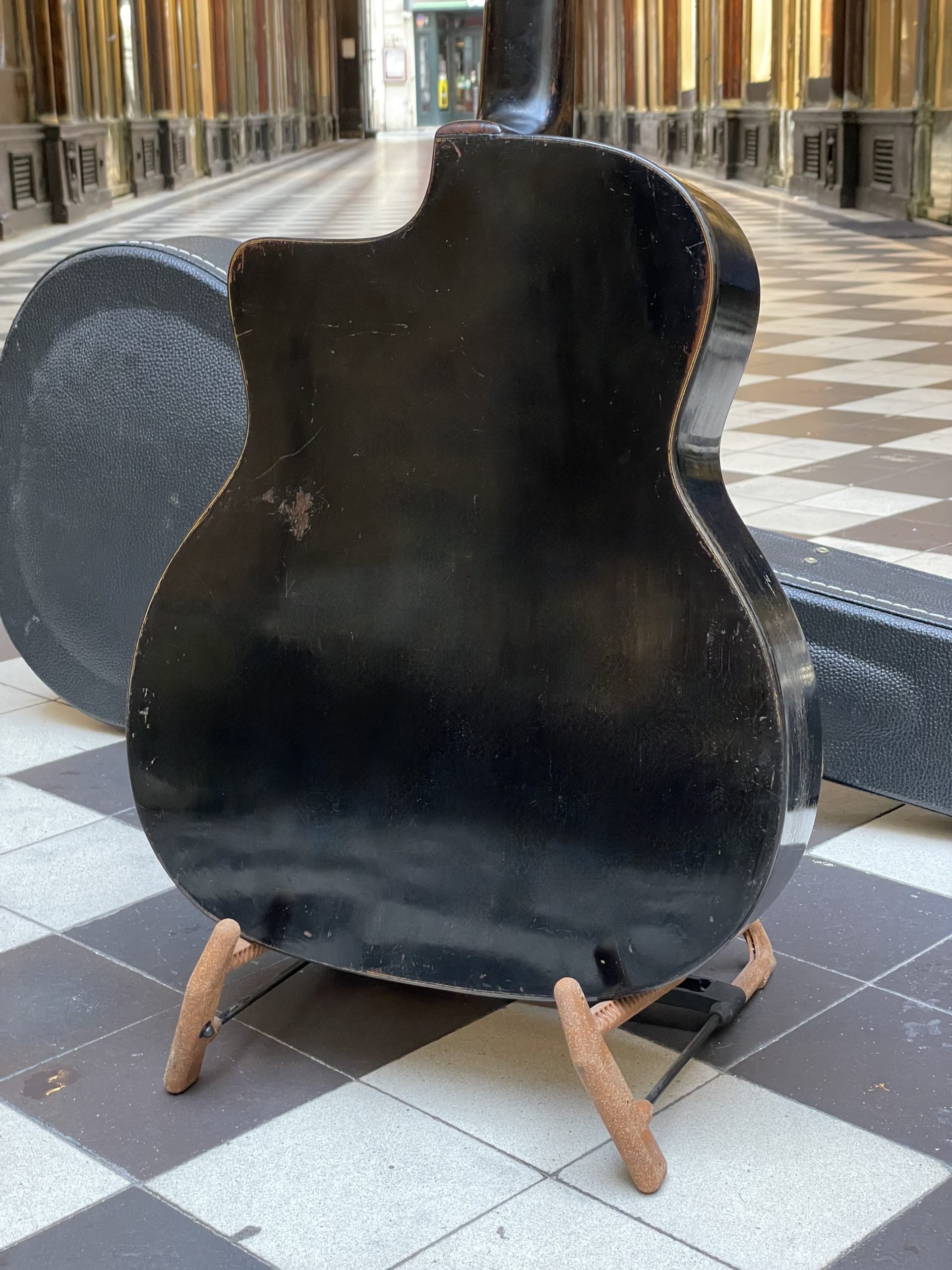
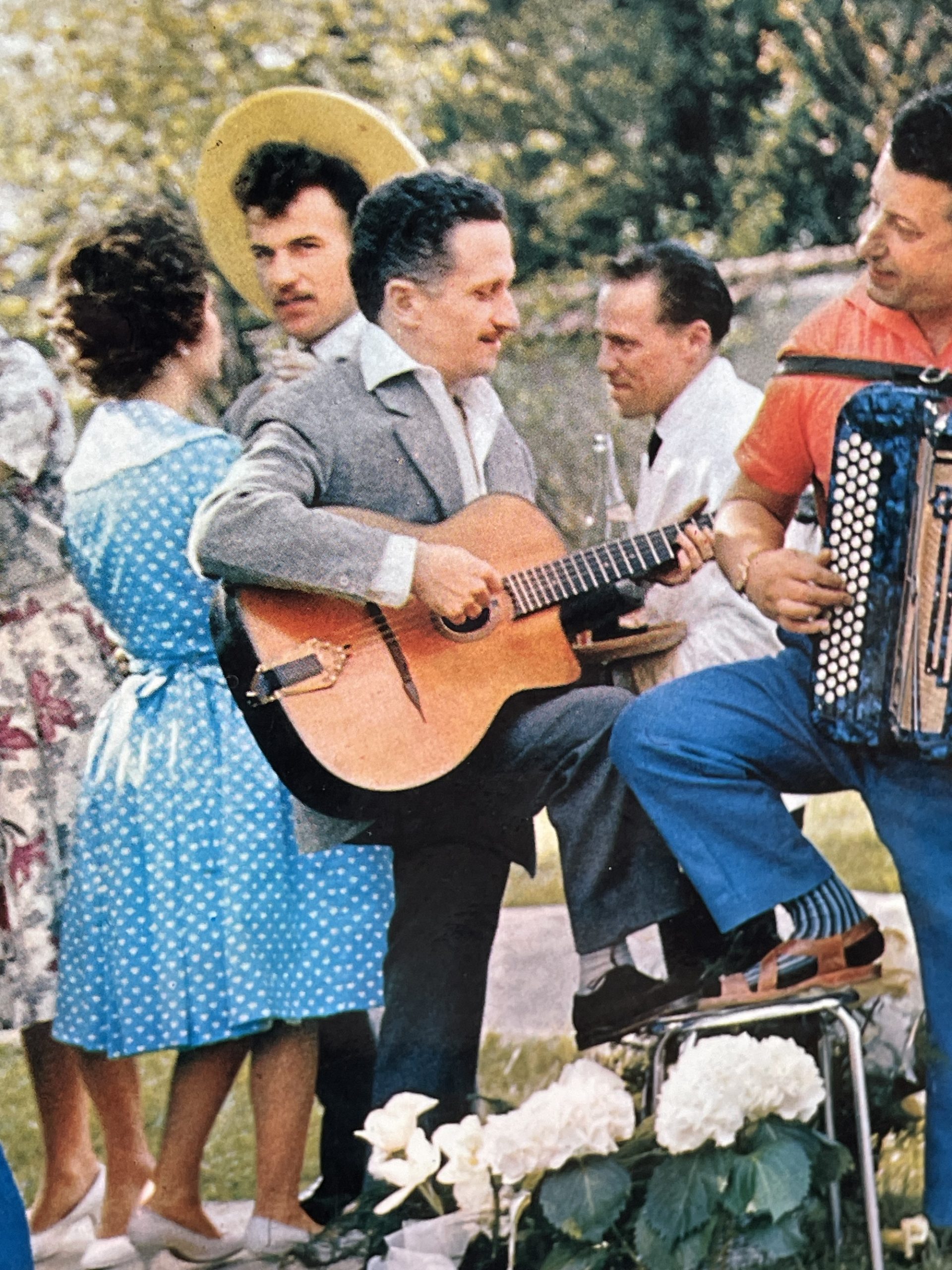
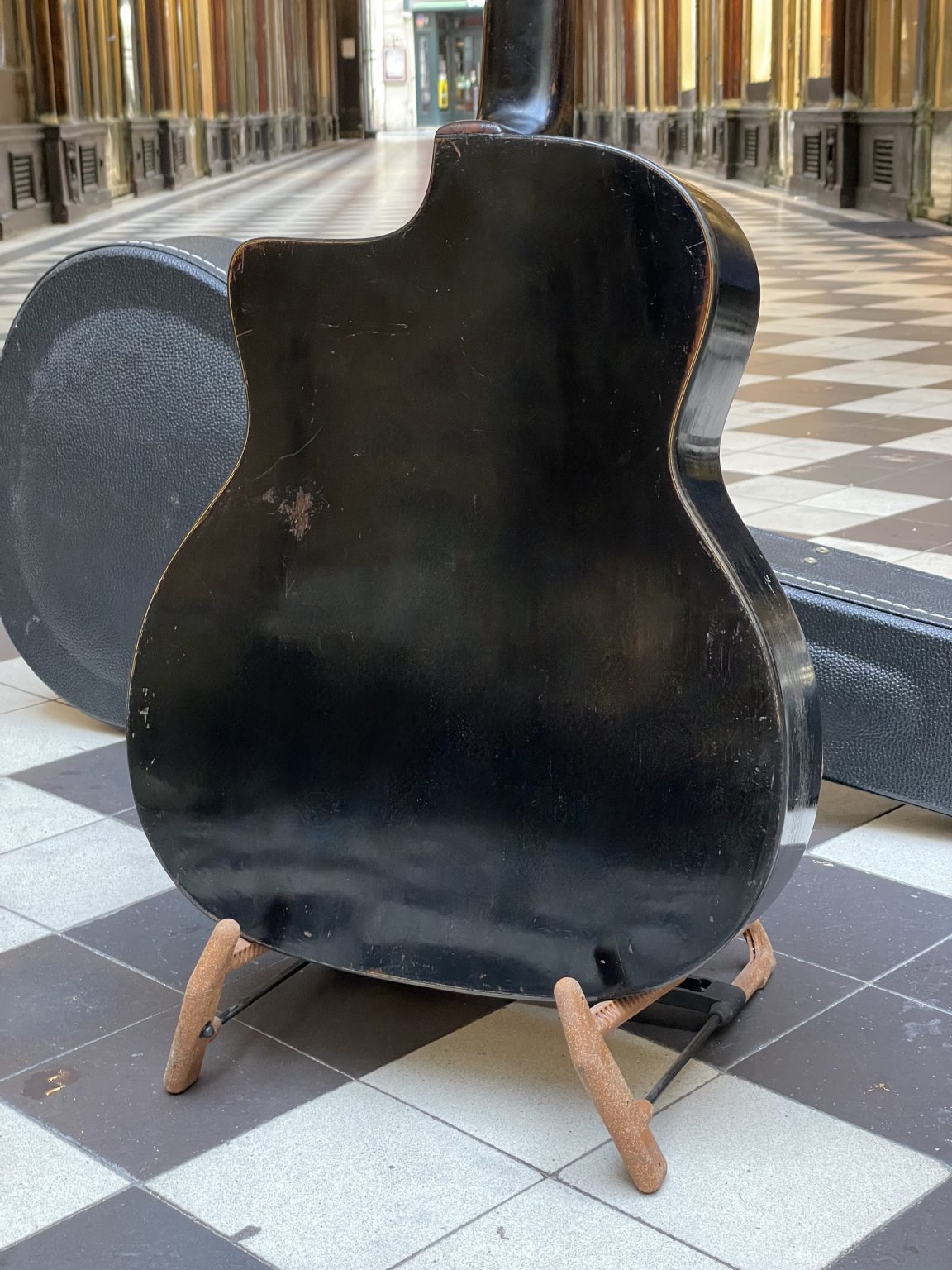
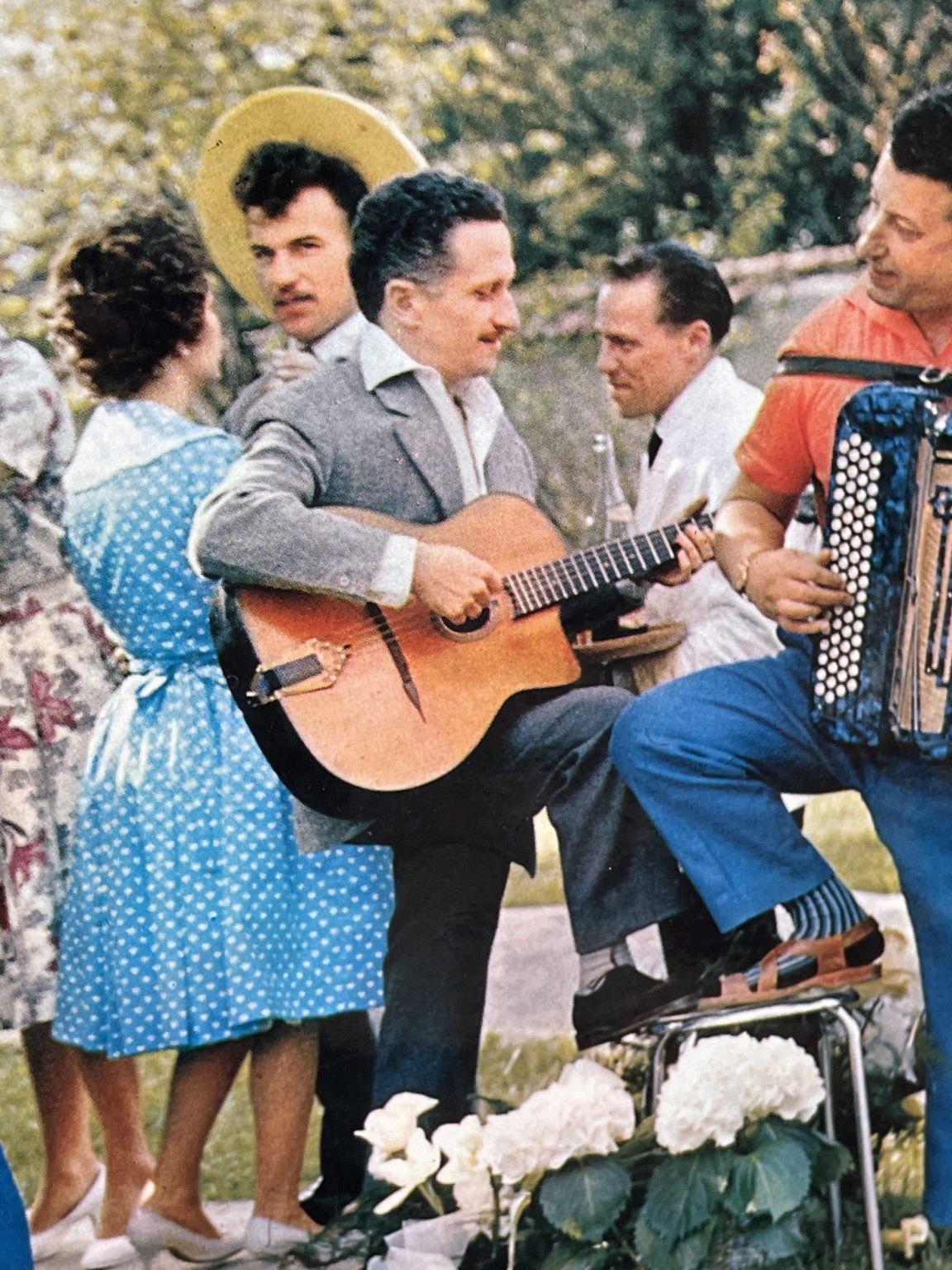
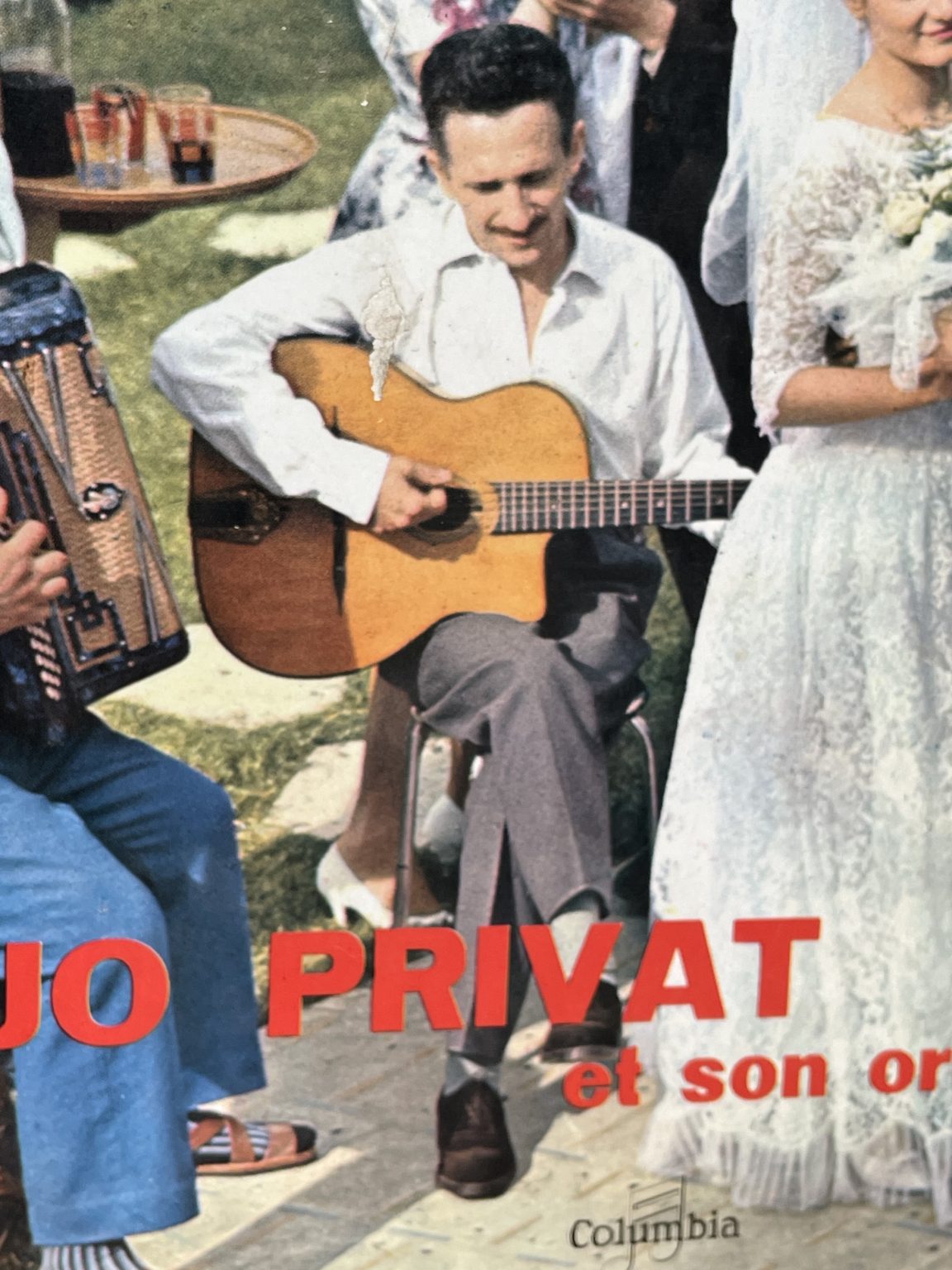
In addition to the eminent context in which it was created, #517 boasts a truly unique history and a characteristic that, to our knowledge, makes it an absolutely rarity: it is a black Selmer. Indeed, with the exception of the soundboard, the exterior of the instrument is entirely coated in an opaque black lacquer, exactly the same type found on certain Chorus models by Antoine Di Mauro produced around the same time! We have very little information on the alternative finishes used by Selmer, so much so that there is only one other known example officially listed in the production register: #570 from 1942, described simply as Solid black jazz guitar. #517 shares the same characteristics, but its corresponding entry in the Selmer register is blank. It is now identified as such, and who knows if other similar models remain to be discovered—or, like other Selmer guitars, if they are lost and will forever maintain the air of mystery surrounding these instruments… What is certain is that this has been the guitar’s color throughout its long tenure with its owner. It should be noted here that, with regard to many Selmer guitars, it is often impossible to know their history, given the many journeys they have undertaken, passing from hand to hand over the years. The #517 has the advantage of having always remained within a single family, the Barones, so we have a complete understanding of its provenance. For two decades, it was the main guitar of Raymond Barone, who notably served as an accompanist for the musette accordion superstar Jo Privat (we tend to forget, in light of our modern era characterized by a hegemonic American culture, how central musette was in French popular culture and a perfectly multicultural musical genre that brought together both the Auvergnats who had imported the eponymous instrument of the genre to Paris and all the successive layers of Italian, Spanish, and Eastern European immigration adding their own influences and instruments, including the accordion). We will now give a platform to Raymond Barone’s son, who shared with us the story of his father’s life and musical career with his Selmer guitar:
“My father, Raymond Barone, born in 1920, learned his first trade from his uncle, Guido Trombetta, a dental technician, but also the guitar, since his uncle was also an excellent Italian guitarist who frequented the pre-war musette dance halls, accompanying the leading figures of the time, Péguri, Carrara…
In fact, it’s all in the family; Italians, everyone plays a little guitar, some better than others, some very well.
At 18, Guido launched my father into the world of music and musette combined by sending him, nervously, as a substitute for his first gig, on July 14th, at a firemen’s ball in Paris, and it worked!
I couldn’t say which accordionist he accompanied that evening, but that was it. He continued his work as a prosthetist but became increasingly well-known in the semi-professional world, where he played instruments I’m unfamiliar with, except for a Di Mauro with a heart-shaped rosette that he inherited from his uncle.
He gave up dentures and turned professional.
Just before the war, he met and played with the gypsies of the time in various dance halls and brasseries (Petit Jardin, Bouscat, Maxéville).
Some of them, Matelo, Baro Ferret, and Jacques Montagne, remained lifelong friends, as did Didi Duprat.
In the early 1940s, he was hired by Jo France to replace someone at the Balajo, where he would stay for over 20 years alongside Jo Privat.
But he needed a proper instrument, and since everyone was playing, like God, on a Selmer, my father thought: me too. As luck would have it, he didn’t need to go to Selmer’s shop on Place Dancourt. Passing by a dealer’s window on Rue Notre Dame de Lorette in Paris’s 9th arrondissement, he saw the 517, bought it, took it with him, and that was that.
It was mainly played in the halls on Rue de Lappe, but also in the venues where my father played accompanying various artists.
I seem to recall him telling me that it had belonged to a Gypsy named Laro, and that was all.
He stopped playing it around 1958-59, after which, with an electric Jacques Favino, he played at galas throughout France, always with Privat, until 1968, marking the end of his musical career.
So, since my father’s death in 1993, I have owned this beautiful instrument, and I’ve shared some details of its history.”
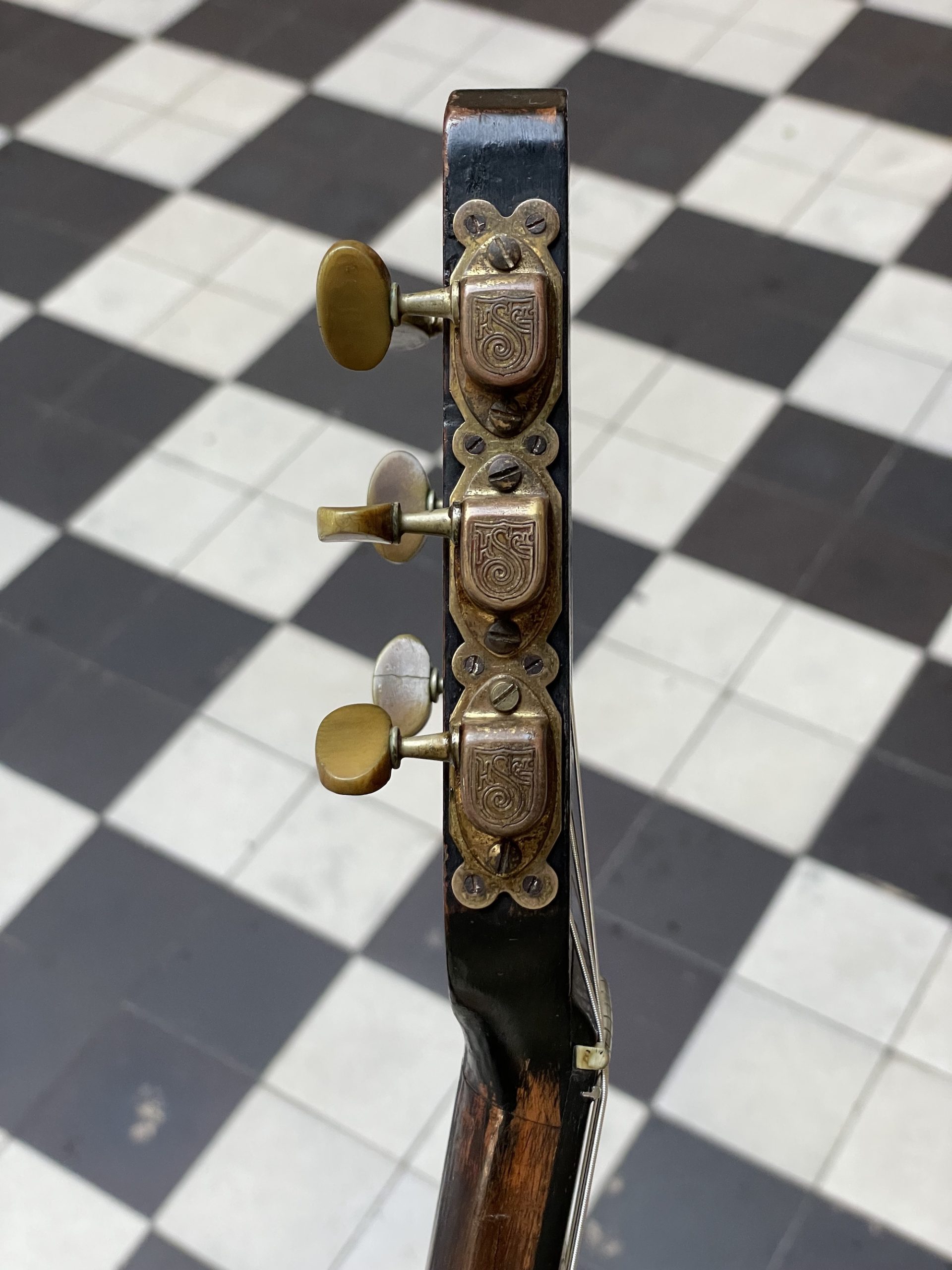
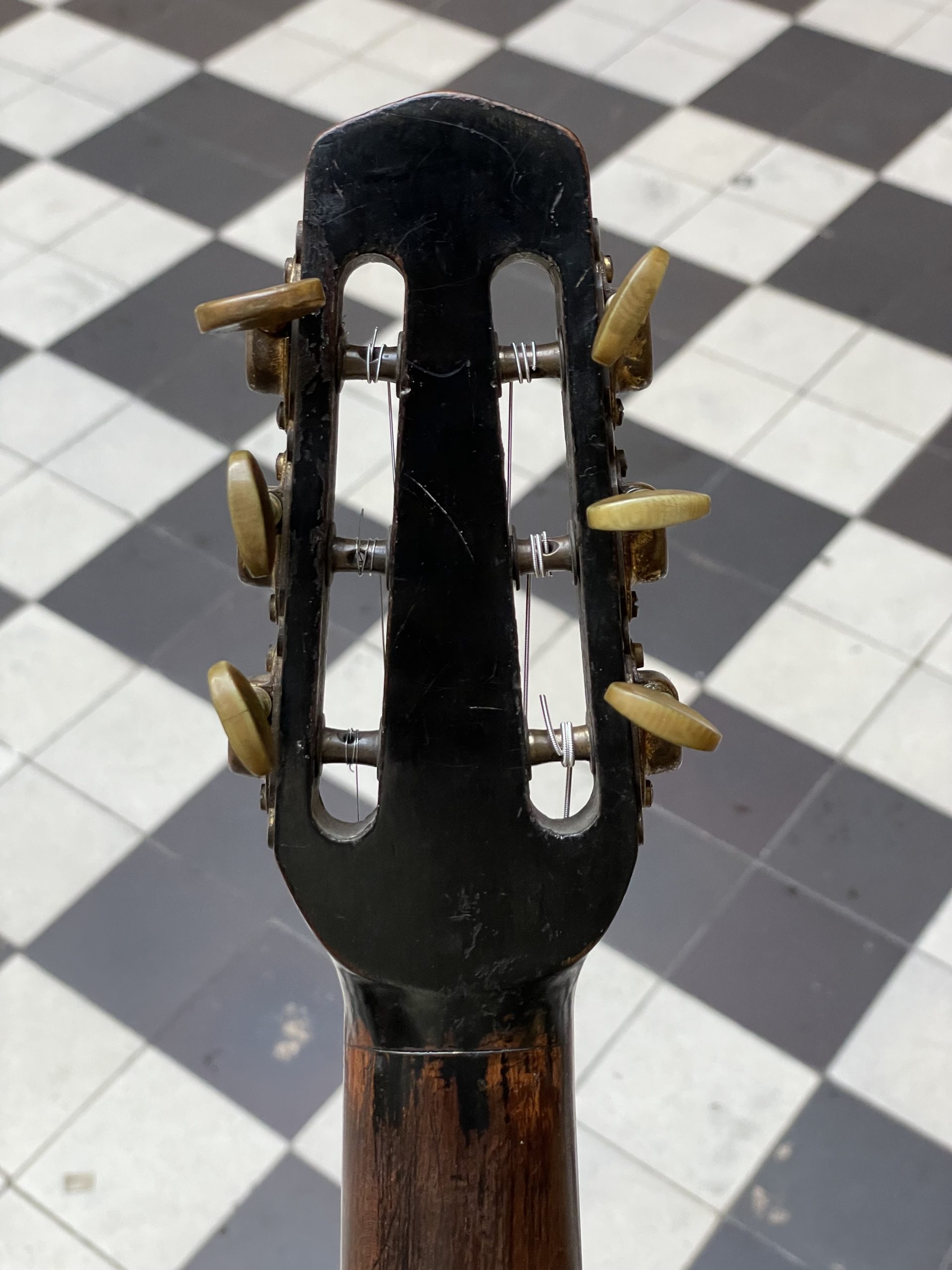
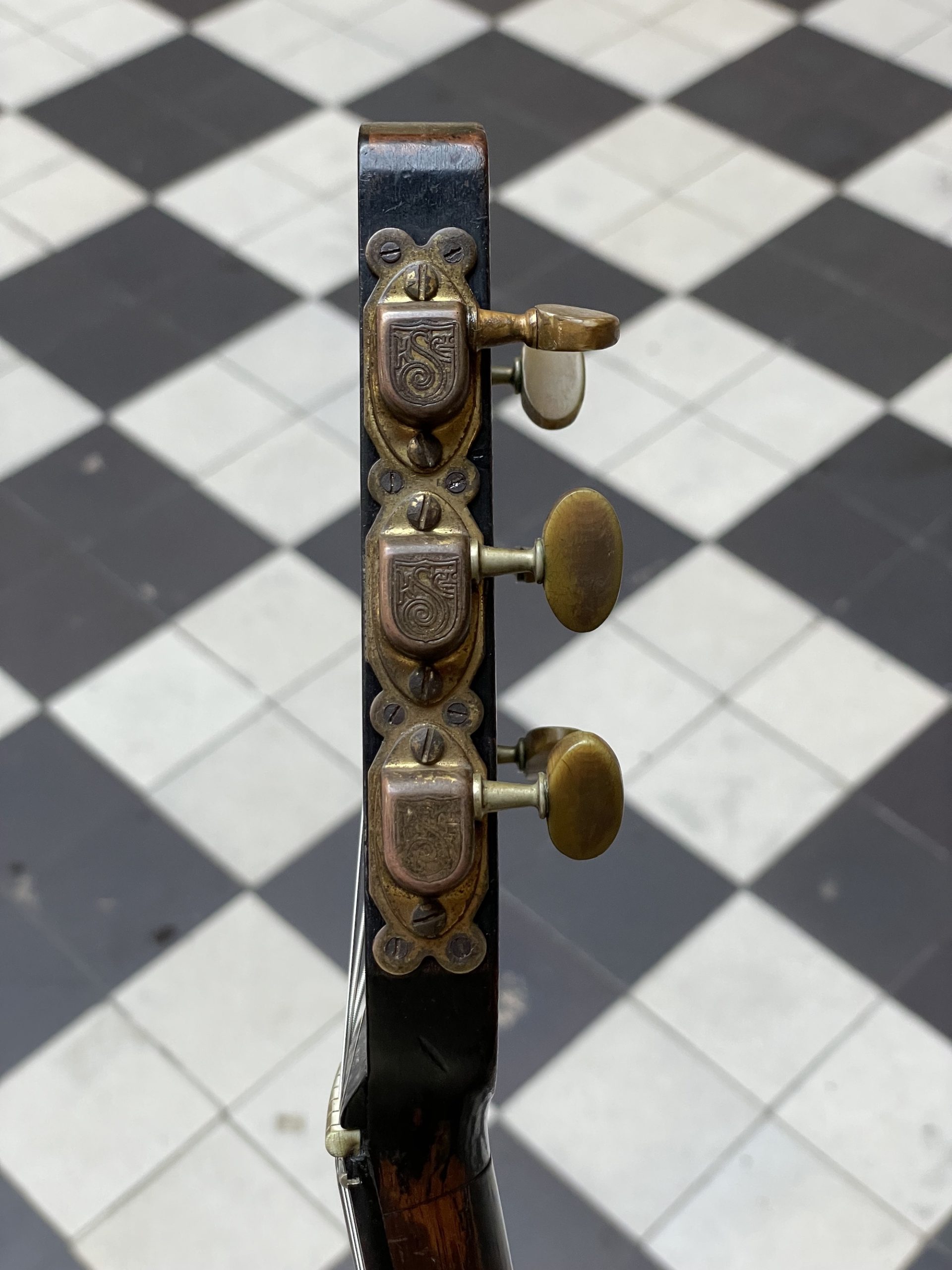
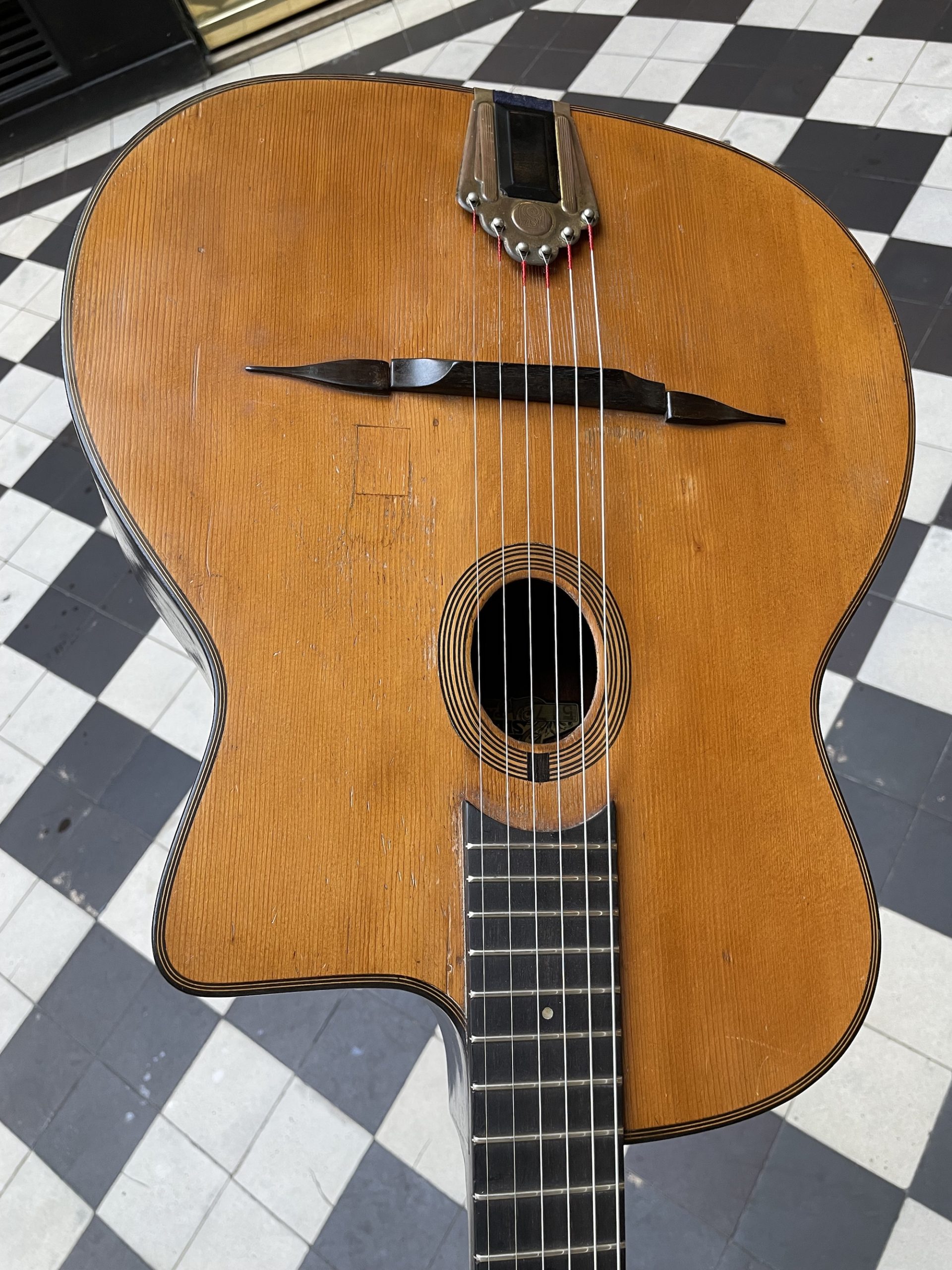
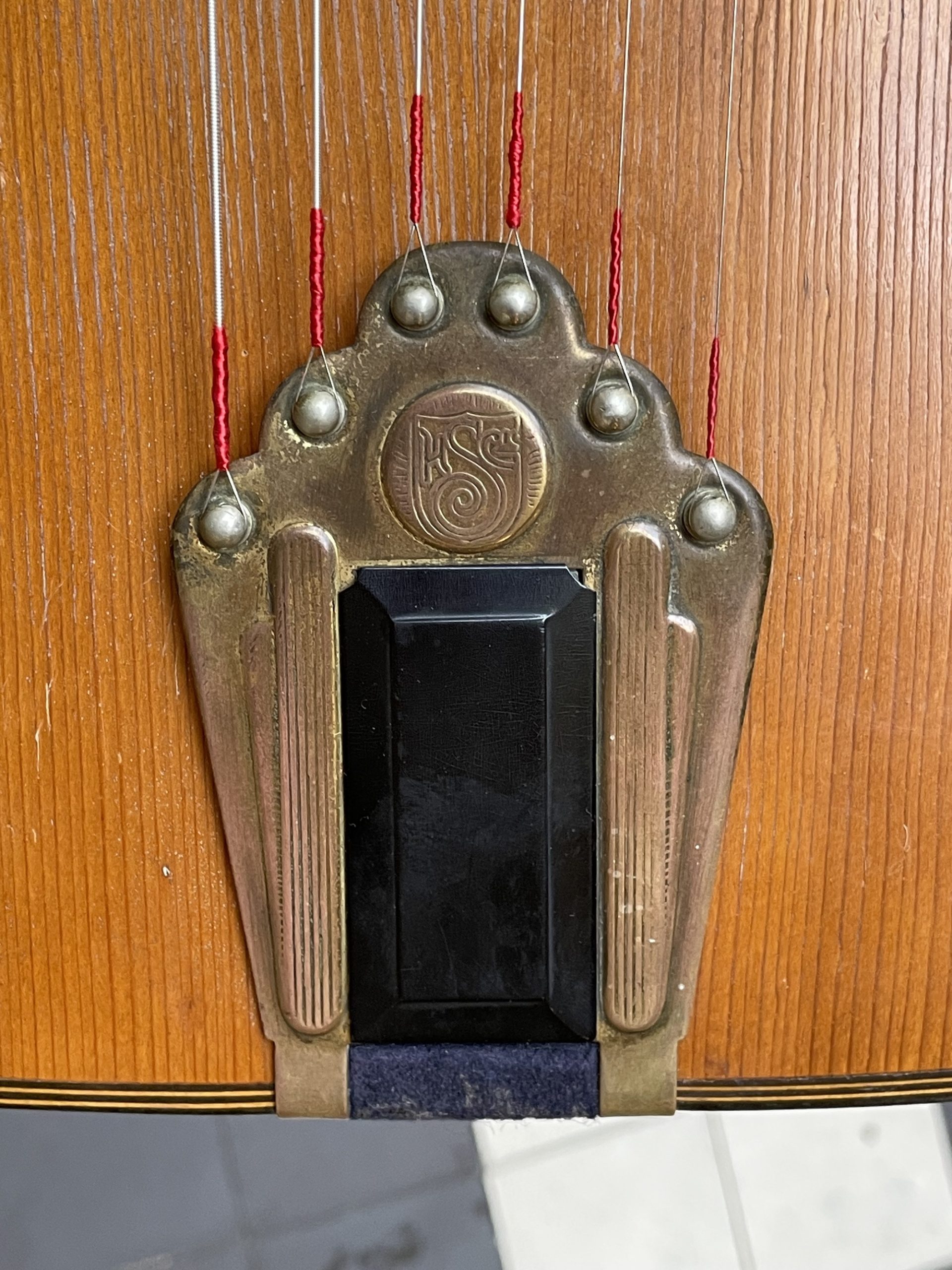
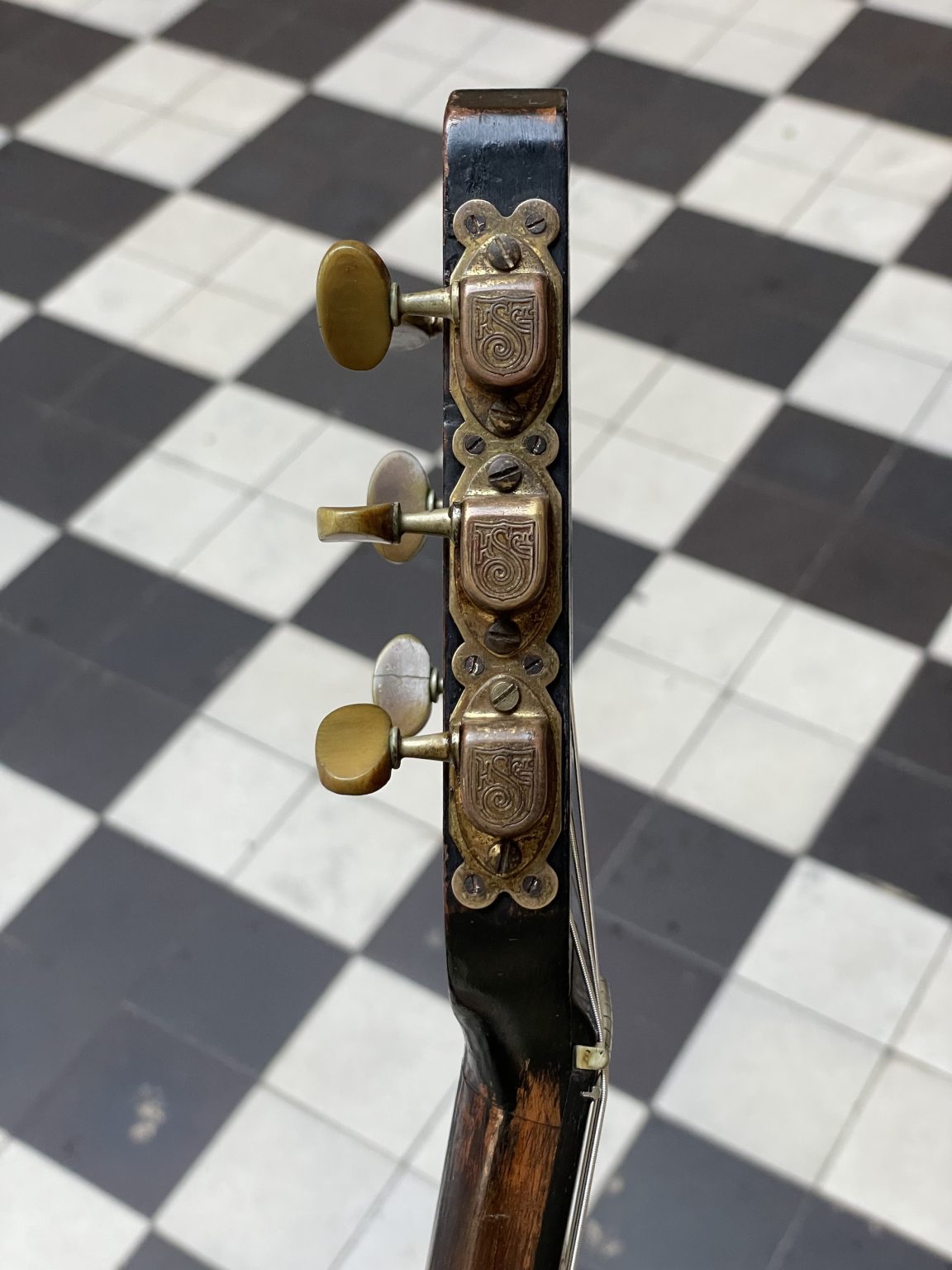
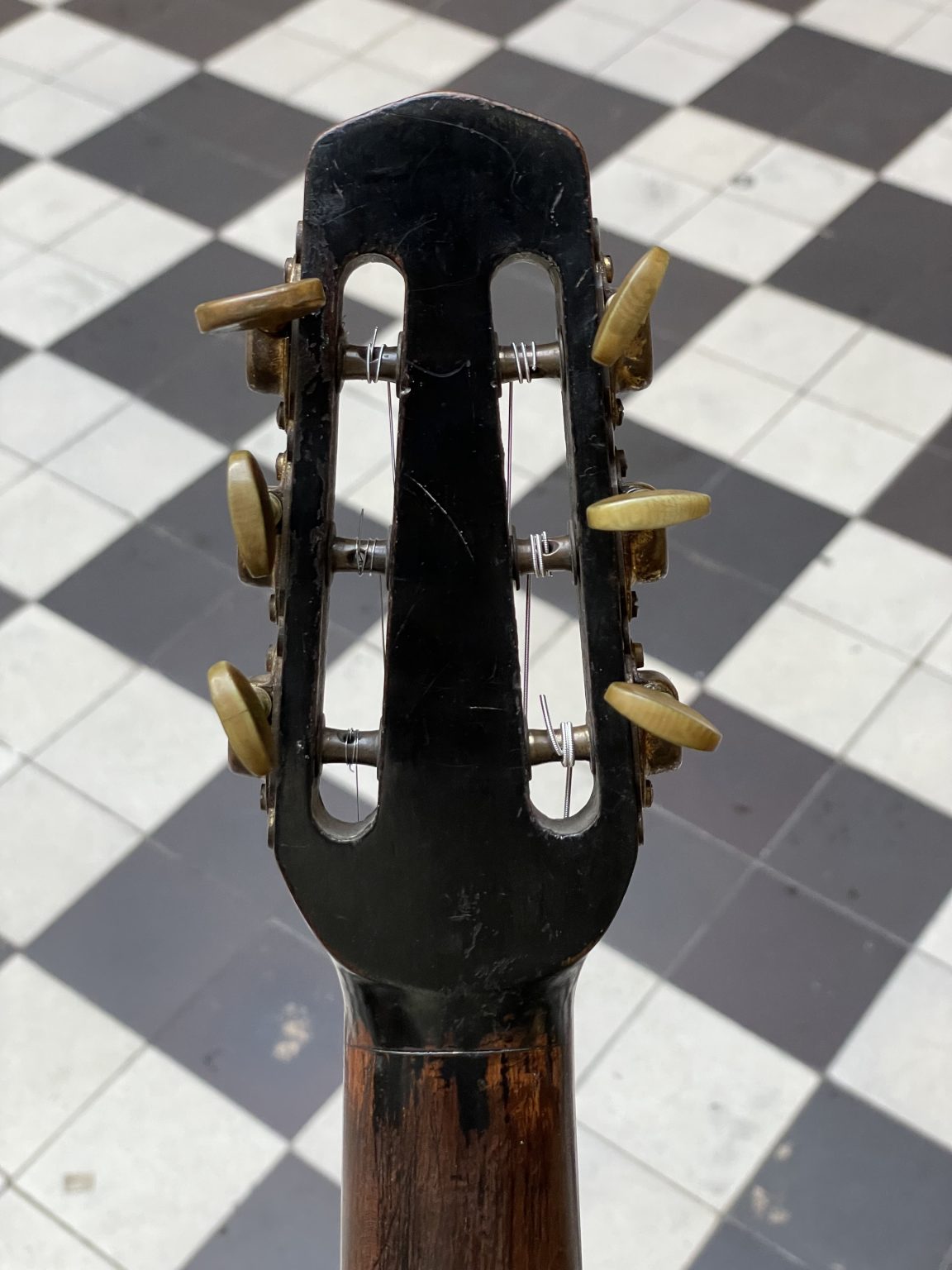
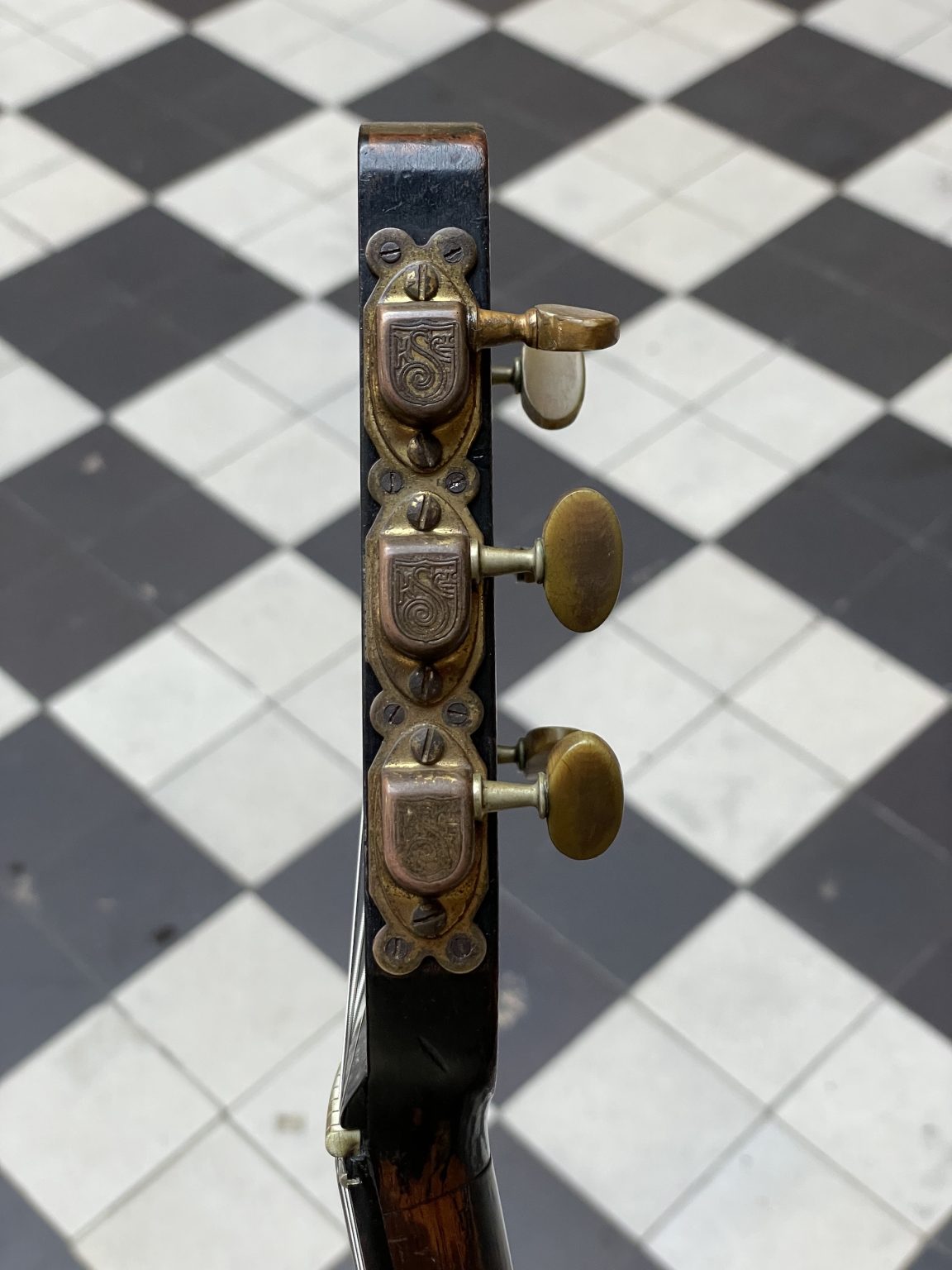
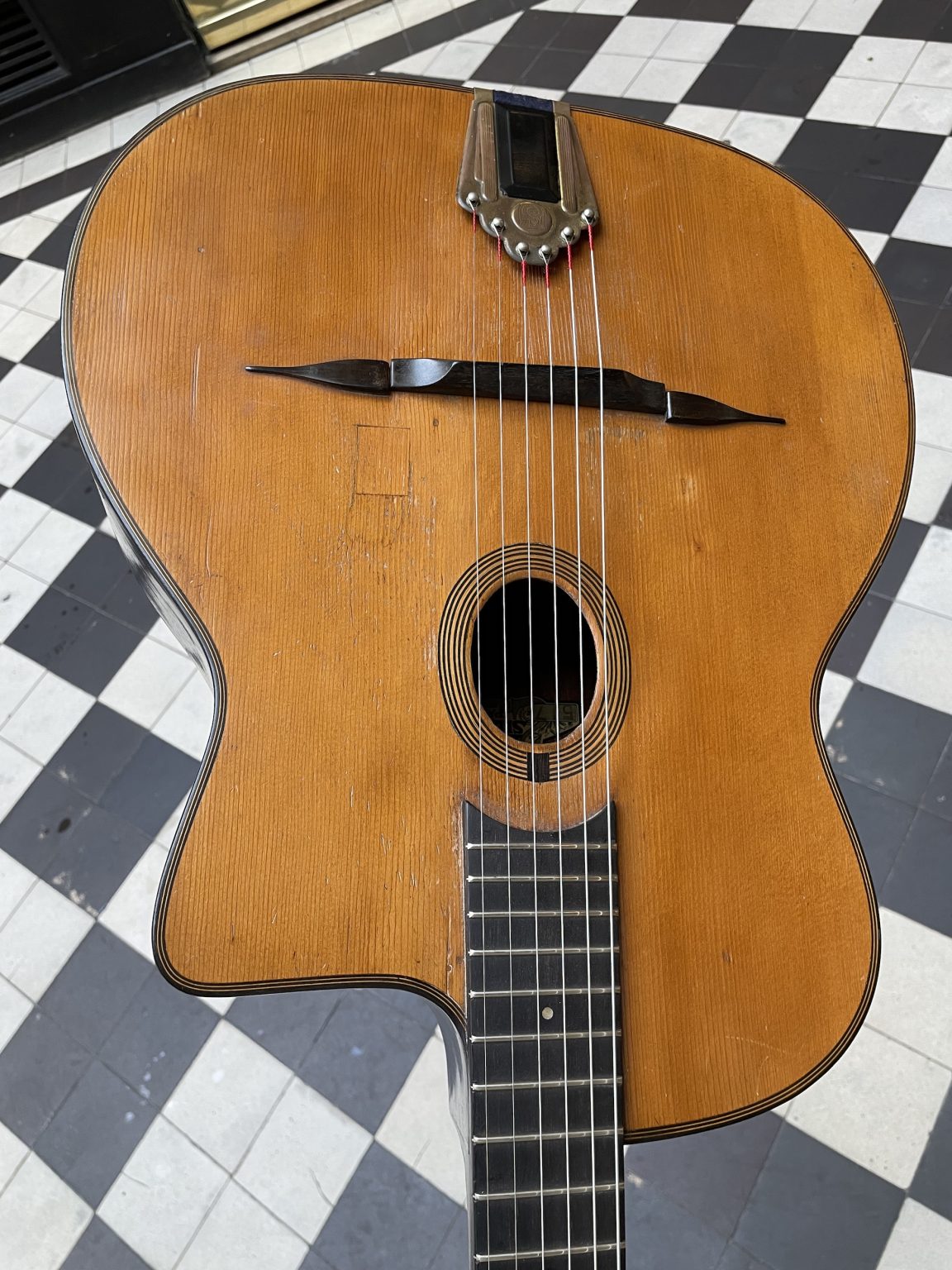
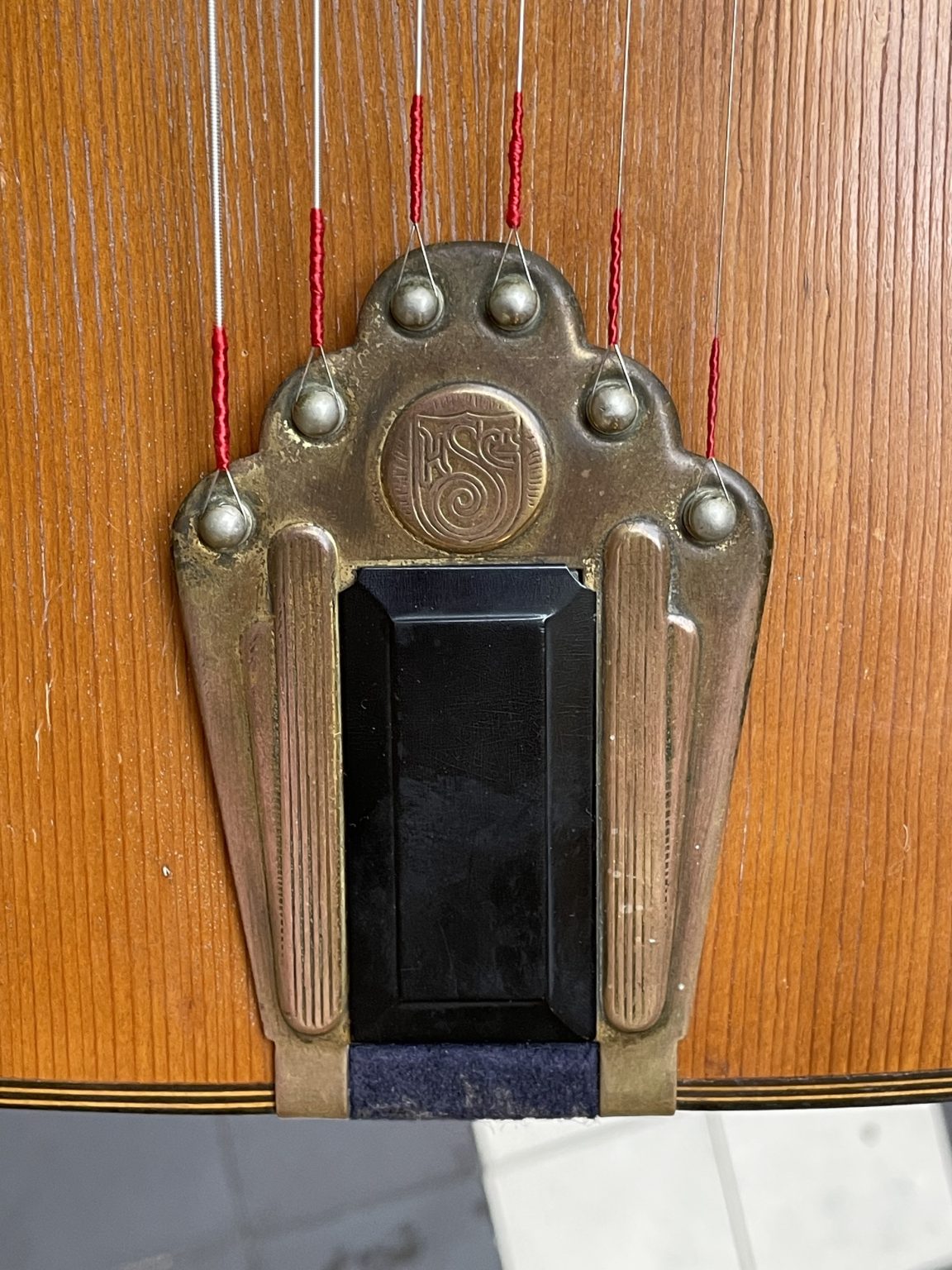
It is very rare to find pre-war examples in such good condition, and yet here is one: this guitar comes to us with all the patina and signs of wear consistent with an 80 year-old instrument, especially since it was played professionally in some rather rough and rowdy environments, as one can imagine! It is nevertheless complete with all its main parts, including its tailpiece and tuners stamped Henri Selmer, and with the exception of a small rectangular patch on the soundboard, there are no cracks or structural damage. Furthermore, it retains all the typical characteristics of the fourteen-fret Jazz model with a small oval soundhole, which over the years became virtually the only model produced by Selmer, whereas originally there were about ten, discontinued one after another after Mario Maccaferri’s departure and the evolution of musical tastes refocusing on jazz. Ultimately, the evolution of the Selmer guitar is comparable to that of American guitars in the 1930s, namely the shift of the neck joint from the 12th to the 14th fret and the lengthening of the scale length. In this respect, it allowed the Selmer to attract new players from the banjo community (we should remember that the banjo, before the guitar, was the quintessential stringed instrument used in ensembles, dance bands, etc., and the first instrument played by Django Reinhardt before he took up a Selmer) by adopting the banjo’s construction and playing characteristics. It was in this form, at least, that Selmer guitars became highly popular with Django Reinhardt and his circle of friends and accompanists, who promoted the “Petite Bouche” guitar primarily through their performances and recordings, thus giving it the legendary status it enjoys to this day. Originating from the end of what is commonly referred to as the transition period, this instrument is broadly identical to Selmer guitars produced until production ceased around 1951, featuring a spruce top, rosewood back and sides, and a three-piece walnut neck.
Given that the guitar had seen very little use since the late 1950s, and despite being in excellent cosmetic condition, we undertook a significant restoration process to restore this Selmer to perfect playability: after adjusting the fingerboard, we completely refretted the guitar with frets of dimensions very close to the originals; the original bracing was partially detached (a common occurrence due to the deterioration of the hide glues used by Selmer), so we carefully glued it back in place. This step had to be carried out somewhat precariously through the guitar’s small soundhole to avoid removing the back of the instrument and damaging the black finish. All of these operations were undertaken with a focus on heritage restoration, aiming to preserve the guitar’s patina and original features that define its identity and value.
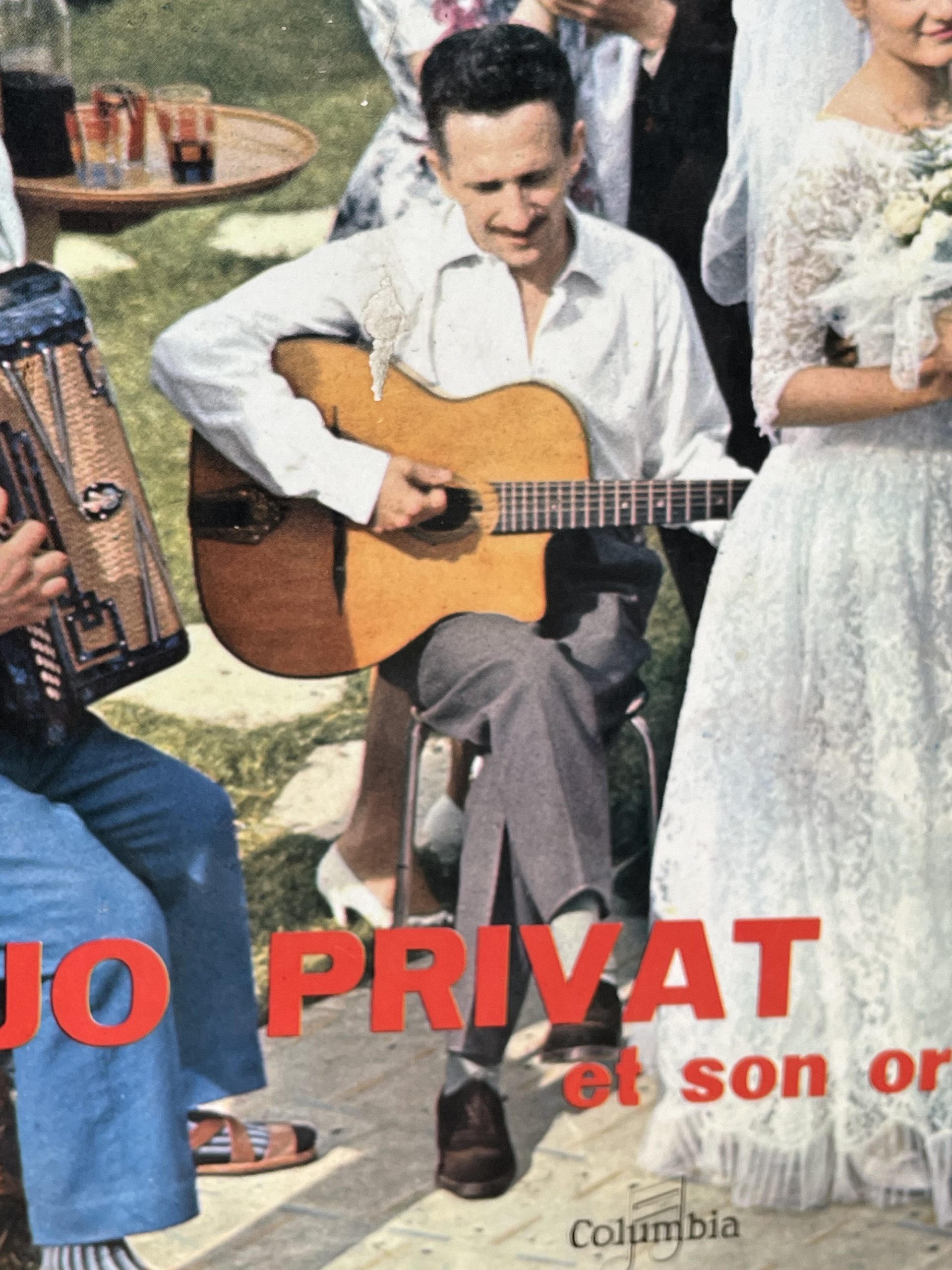
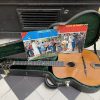
Sold in a modern fitted hardshell case. Accompanied by a certificate of authenticity issued by Jérôme Casanova. To complete this lot, we are including two records by Jo Privat and his Musette Orchestra whose covers illustrate Raymond Barone playing his Selmer Noire #517 (the black finish of the instrument can be clearly seen) – the recordings date back to the 50s, so everything suggests that the guitar heard in these albums is the one presented here!
Related products
-
Sale!
c.1957 DEL VECCHIO HARP-GUITAR
€6.500,00Original price was: €6.500,00.€4.500,00Current price is: €4.500,00.